


Types of Breast Implants: Finding Your Perfect Size, Shape & Material
Publish Date:26 August 2026
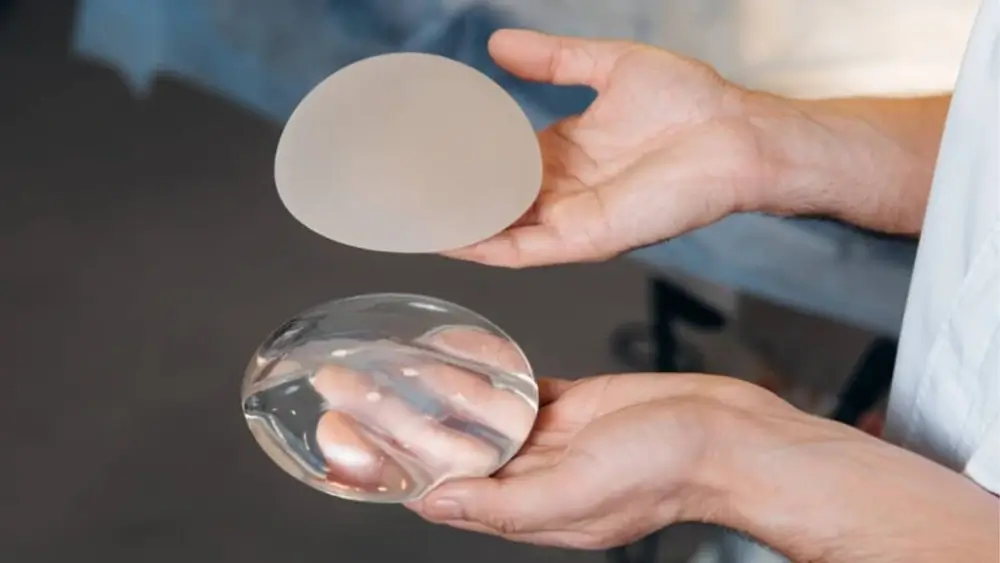
Written by the Doku Clinic editorial team. Reviewed and approved by Dr. Engin Öcal, Head Plastic, Reconstructive & Aesthetic Surgeon.
Round or teardrop-shaped, silicone or filled with cohesive gel. Whichever you choose, the different types of breast implants will influence how you move and feel for the rest of your life. In this 2026 guide we catalogue all different materials, shapes, sizes and textures, including the best breasts for each option, along with important considerations about incision lines and breast implant placement (subglandular, submuscular or dual plane).
Key takeaways:
- Choosing the right cc volume depends on your chest width and elasticity
- Teardrop implants provide a gentle, natural slope, while round implants maximize the upper-breast.
- Deep submuscular placement is highly recommended to hide implant edges on thin body types.
The Anatomy of a Breast Implant
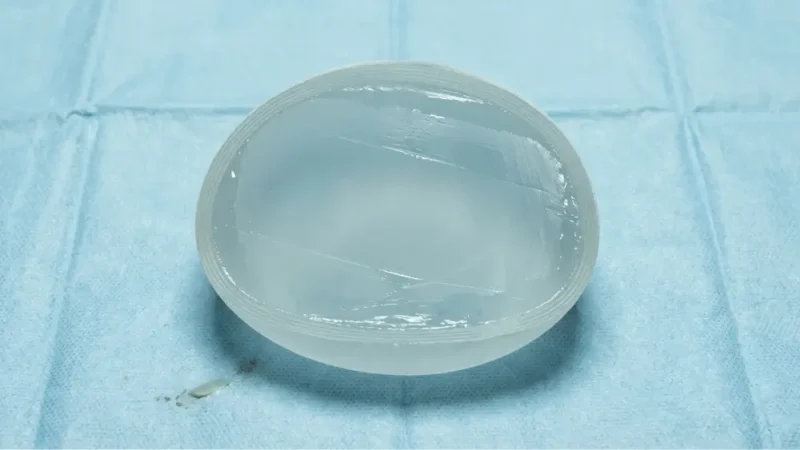
Before diving into the types of breast implants proper, consider that every single one consists of two parts: shell and filler.
- The Outer Shell: a silicone elastomer, designed to be flexible enough to feel natural yet robust enough to prevent ruptures. In 2026, they are manufactured with multiple layers.
- The Inner Filler: the filler determines the weight, movement, and feel of the breast implant. Patients generally choose between a saltwater solution or silicone gel.
| Feature | Saline Core | Silicone Core |
| Material | Sterile saltwater solution | Cross-linked silicone gel |
| Consistency | Firmer, similar to a water balloon | Closely mimics natural breast tissue |
The 2 Types of Breast Implants by Material
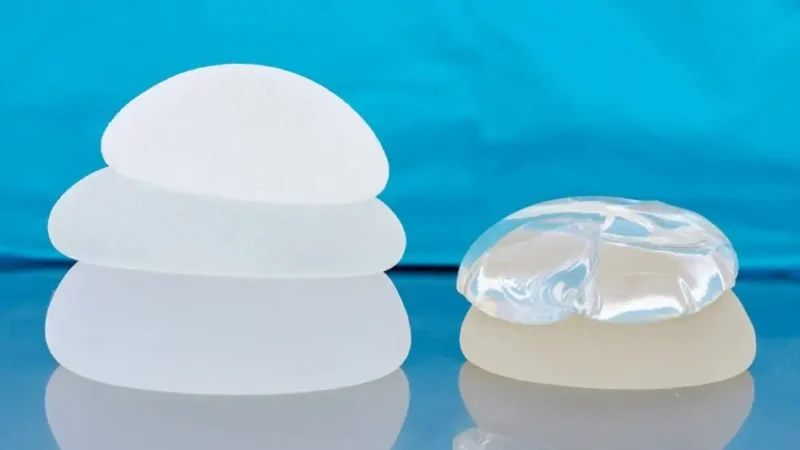
The core filler of the breast implant will determine how it feels to the hand. There are three filler types dominating breast augmentation surgery:
1. Silicone Breast Implants
For decades, silicone breast implants have remained go-to for natural look and feel. The viscous gel mimics the density and bounce of breast glands. Because of their biomimicry, silicone implants are less prone to rippling, too. However, they need a longer incision than saline because they are pre-filled.
Gummy Bear Breast Implants
Gummy bear breast implants are filled with form-stable highly cohesive silicone. If you were to cut one in half, the gel would remain intact, holding its shape. This integrity means that gummy bear implants retain their projection over decades, resisting gravity.
2. Saline Breast Implants
Saline breast implants are filled with a sterile saltwater solution. Unlike silicone, they are inserted empty and filled during the operation. This allows for smaller surgical incisions and less visible scarring. If a saline implant ever ruptures, the saltwater is naturally absorbed.
The 2 Breast Implant Shapes
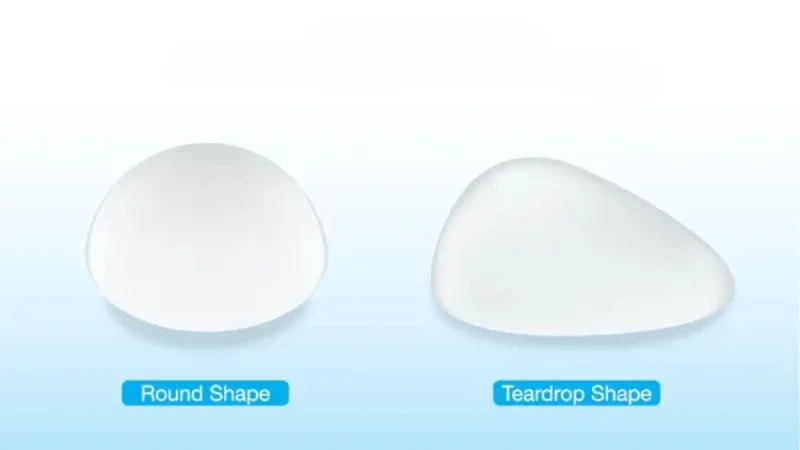
Once the material is chosen, the next decision is the shape of the implant. The shape will define how your clothes fit and the curve of your silhouette.
1. Round Breast Implants
Round breast implants are best for achieving eye-catching results. However, surgeons must calculate your chest width to ensure a round implant does not look disproportionate or obvious. Another advantage is they cannot rotate out of place. If they spin over the years, results remains unchanged.
2. Teardrop (Anatomical) Implants
If your priority is a seamless result, teardrop breast implants look the most natural. They are designed with more volume at the bottom, like the slope of a natural breast. They are also filled with form-stable “gummy bear” silicone, so the teardrop shape holds over decades.
Breast Implant Sizing and Projection
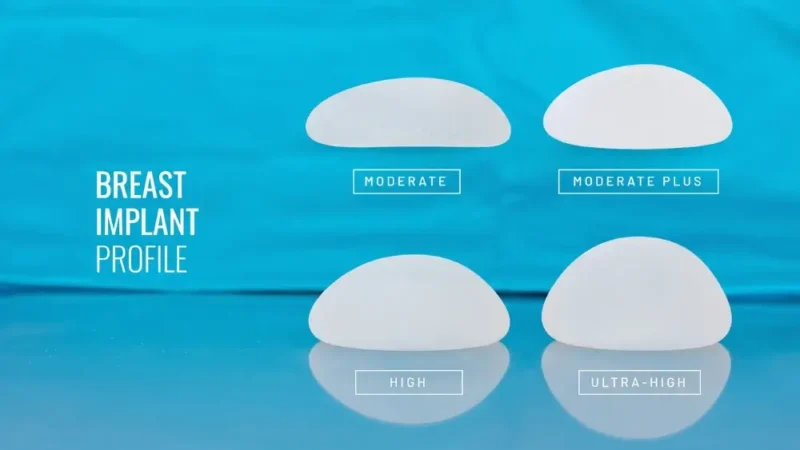
Breast implant sizes are measured in cubic centimeters (cc). What matters in breast surgery, however, is not so much the size, but body proportions. A 350cc breast implant will look drastically different on a tall, broad-shouldered patient than it will on a petite frame.
Tissue Elasticity in Choosing the Right Size
Even the most perfect implant volume and profile will fail if your body cannot support it. Your skin’s elasticity and the thickness of your breast tissue act as the foundation for the entire surgery. If you demand a massive implant size that exceeds your biological limits, you face (potentially) severe skin thinning, visible rippling, and premature sagging.
Breast Implant Sizes in cc
There is no fixed conversion between cubic centimeters and bra cups. A 300cc implant on a 11cm chest base reads as a full C, while the same 300cc on a 14cm base disappears into the tissue and barely reaches a B. Manufacturers also vary: two implants of identical volume can look different depending on profile and shell. Use the table below as a rough orientation for a patient of average build, then let your surgeon confirm against your actual base width measurement.
| Volume | How the result looks | Typically recommended for |
| 150–200cc | Barely detectable change. | Petite frames, post-breastfeeding deflation |
| 200–250cc | Roughly one cup size. | Narrow chests, thin tissue |
| 250–300cc | The most commonly requested range in Europe. | Average chest width (12–13cm base) |
| 300–350cc | Around two cup sizes on an average frame. | Good skin elasticity |
| 350–400cc | Bras and tops usually need replacing. | Broader chests, or thick tissue |
| 400–450cc | Obvious augmentation. | Wide base widths (13.5cm+) with enough tissue to cover the implant edges |
| 450–550cc | Implant weight starts to affect long-term skin behavior. | Tall or broad-shouldered patients with strong skin elasticity |
| 550cc and above | Maximal projection. Rarely proportionate. | Reserved for very wide chests or revision cases |
Low, Moderate & High Projection
The profile of a breast implant plays a big role in its size perception. It determines how far the implant projects outward from your chest wall.
- Low profile implants have a wider base and sit flatter against the chest.
- High profile implants feature a narrower base but project further forward.
- Moderate profiles sit comfortably in the middle, offering a versatile compromise.
Smooth vs. Textured Breast Implants (Surface Feel)
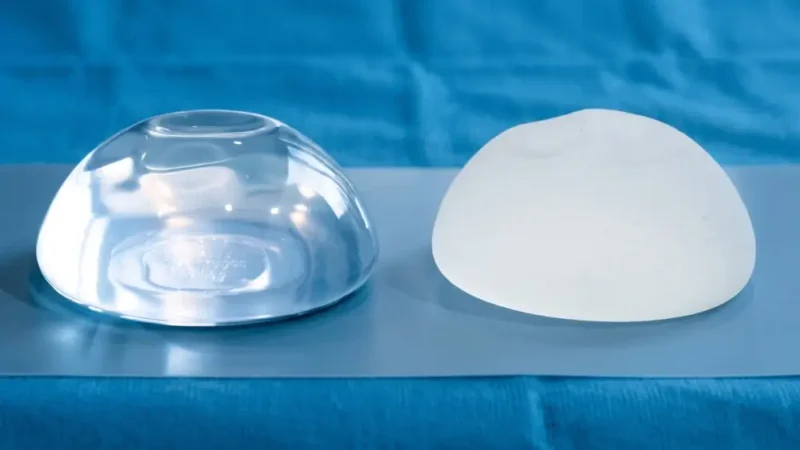
The choice between a completely smooth implant shell or a rough, sandpaper-like coating is a critical decision. The surface influences how the implant interacts with surrounding tissue, affecting the long-term stability of your results.
Smooth Breast Implants
Smooth breast implants are the undisputed standard, offering the softest, most natural movement possible. The shell is completely frictionless, so the implant moves freely, mimicking the natural bounce of breast tissue.
Textured Breast Implants
Textured breast implants have a rough surface to adhere to your tissue. This grip prevents rotation, making it ideal for teardrop breast implants.
Incisions and Surgical Placement
The topic of breast incisions, resulting scars and breast implant placement is unavoidable in mastoplasty surgery. Afterall, some types of breast implants are compatible only with a particular incision or a specific placement, whether subglandular, submuscular or dual plane.
Submuscular vs. Subglandular Implant Placement
Placing the implant directly above the pectoral muscle is known as the subglandular placement. While it offers a faster recovery, it leaves the implant vulnerable to visible rippling.
Conversely, the submuscular placement tucks the device partially or fully beneath the chest muscle. This provides natural coverage that hides the edges of the silicone shell, ensuring a smooth contour that ages beautifully.
The Dual-Plane Technique
The greatest innovation of modern breast augmentation is the dual-plane technique. This advanced surgery places the upper half of the implant beneath the pectoral muscle, while the lower half rests under the glandular tissue.
Executing a flawless dual-plane breast augmentation requires exceptional knowledge and years of specialized training. Surgeons like Dr. Engin Öcal, at Doku Clinic, utilize this method to provide maximum support, reducing the risk of breast sagging long-term.
How Implant Choice Dictates the Incision
If your absolute priority is having the smallest possible incision, you might be in the minority of patients choosing saline vs silicone implants. Because
- Silicone implants are pre-filled, so they require a larger incision, typically hidden in the inframammary fold (the natural breast crease).
- Saline breast implants are inserted empty like a deflated balloon. This allows surgeons to use a tiny incision, filling the prothesis with sterile saltwater only once it is positioned inside.
How Much Do Breast Implants Cost?
Pricing for breast augmentation depends less on the implant than on where the surgery happens. Anesthesia, facility fees, implants, compression garments and follow-up appointments are usually added afterwards, and the final invoice can land 40% above the first number you were given.
| Country | Typical total cost (2026) |
| United States | $6,000 – $12,000 |
| United Kingdom | £4,500 – £8,000 |
| Canada | CAD 9,000 – 15,000 |
| Australia | AUD 10,000 – 18,000 |
| Ireland | €6,000 – €9,500 |
| Turkey | €3,000 – €5,500 (all-inclusive) |
Istanbul has one of the densest concentrations of plastic surgery clinics anywhere, and the volume of cases performed there keeps per-case costs low. Turkish clinics also tend to quote all-inclusive packages covering the implants, hospital stay, hotel, transfers and post-operative checks.
How Long Do Breast Implants Last?
Implants are not lifetime devices, but they do not have an expiry date either. They are replaced when something changes. The common figure is 10 to 15 years. In practice, cohesive gel implants often pass twenty years.
Reasons for replacement fall into two groups:
- Implant-related: shell rupture, capsular contracture, rotation of a textured anatomical implant, or implant malposition.
- Patient-related: pregnancy, significant weight change, natural tissue descent with age, or simply wanting a different size.
Breast Implant Revision Surgery
Revision is any second operation performed on a breast that already has implants. Around one in five patients will have one at some point. It is a normal part of the augmentation process rather than a sign that something went wrong.
What the surgery involves depends on the problem:
- Implant exchange: the old device is removed and replaced through the existing scar.
- Capsulectomy: the scar tissue capsule is removed, partially or completely, usually for contracture.
- Pocket change: the implant is moved from a subglandular to a submuscular or dual-plane position to gain tissue coverage.
- Revision with mastopexy: a lift is added when skin laxity has outpaced the implant.
- Explantation: removal without replacement, with or without a lift.
Revision is technically harder than the first operation. The anatomy has been altered, blood supply is different, and scar tissue complicates the dissection. Costs reflect this, running higher than primary augmentation.
Fat Grafting Breast Augmentation
During a fat transfer breast augmentation, fat is harvested by liposuction from other areas of your body: it is therefore also a body sculpting procedure. Fat grafting (also called autologous fat transfer) can be extracted from your tummy, thighs or hips and combined with breast implants.
Important Note: 30 to 40% of the transferred fat is reabsorbed within the first year. Patients wanting two cup sizes or more usually need multiple sessions if fat grafting is not combined with implants.
FAQs
How long do breast implants actually last?
Modern breast implants do not expire, but they are not strictly guaranteed for life. Most require replacement between 10 to 15 years. However, premium 5th-generation gummy bear implants often maintain flawless structural integrity well beyond two decades unless clinical complications arise.
Which type of breast implant looks the most natural?
Teardrop anatomical implants placed under the muscle provide the most authentic, natural slope. For patients with adequate existing tissue, smooth round silicone implants in a dual-plane placement also deliver spectacular, undetectable results when matched perfectly to your chest width.
Is it safe to fly after getting breast implants?
Yes, flying is perfectly safe. Cabin pressure changes absolutely will not rupture your breast implants. However, you must wait 5 to 7 days post-surgery in Istanbul. This ensures proper healing and allows your Doku Clinicsurgical team to issue final medical clearance.
Silicone or saline: which is the better choice?
Silicone gel implants are universally preferred by elite surgeons for a truly natural feel and shape. While saline implants require smaller incisions and offer immediate rupture detection, highly cohesive silicone implants prevent visible rippling and mimic natural glandular tissue much more effectively.
Will breast implants affect my mammogram screenings?
No, but they require specialized screening techniques. You must inform your radiologist beforehand. Submuscular placement makes imaging easier. Technicians use displacement views to safely push the silicone implant back and pull the natural breast tissue forward for accurate cancer detection.
What is capsular contracture and how do I avoid it?
It is a painful, unnatural hardening of scar tissue around the implant device. You drastically reduce this risk by choosing smooth breast implants, ensuring submuscular placement, and strictly following the elite post-operative massage protocols provided by your surgical team.
Do breast implants affect my ability to breastfeed?
Most women can breastfeed successfully after a breast augmentation, but minor risks exist. The inframammary (under-breast) incision preserves milk ducts best. Avoid periareolar (around the nipple) incisions to maximize your chances of uncompromised milk production later in life.
References
- ISAPS (International Society of Aesthetic Plastic Surgery): Annual global data on surgical volumes and mandatory complication insurance standards.
- ASPS (American Society of Plastic Surgeons): Long-term clinical studies on silicone gel durability and capsular contracture
- FDA (Food and Drug Administration): 2026 safety guidelines on implant surface textures and biomaterial approvals.