


Male Rhinoplasty for Dorsal Hump Removal: Procedure, Recovery & Results
Publish Date:12 June 2026
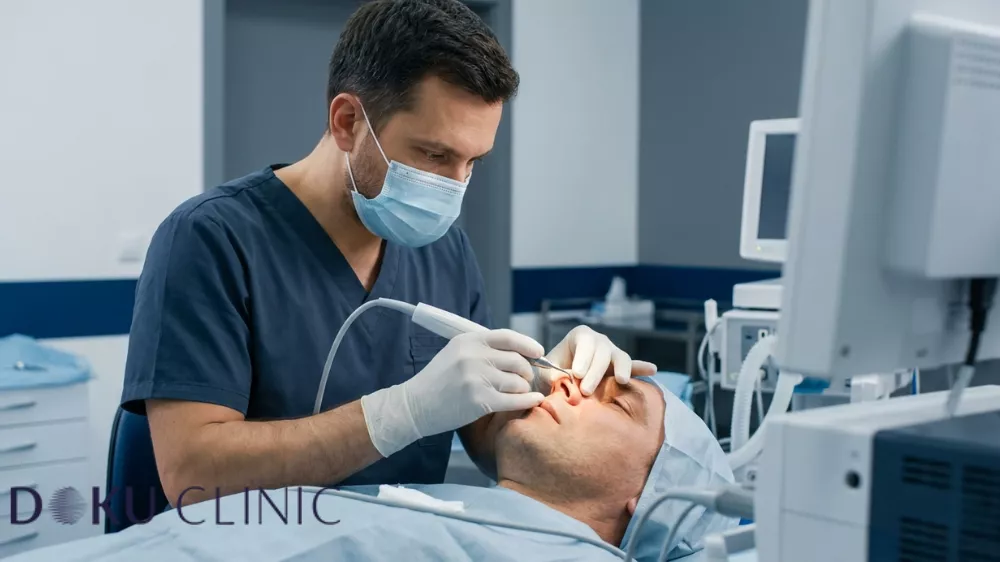
A prominent dorsal hump is one of the most common reasons men seek nasal correction. The goal of male dorsal hump removal is to establish a strong, straight, and masculine profile while preserving or improving airway function.
This medical guide by Doku Clinic breaks down the structural anatomy, surgical techniques, risks, costs and recovery in male nasal contouring.
Components of the Nasal Bridge
A dorsal hump is a protrusion located along the middle and upper third of the nasal bridge. This irregularity is rarely composed of a single tissue type. Instead, it consists of a distinct combination of hard bone and flexible cartilage.
- Upper Third: Formed by the paired nasal bones, which attach directly to the frontal bone of the skull.
- Middle Third: Composed of the upper lateral cartilages and the vertical cartilaginous septum.
- The Keystone Area: The critical intersection where the bone meets the cartilage, acting as the main structural vault of the midface.
Understanding Male Facial Symmetry
Creating a concave nasal bridge can feminize the male face, which remains a leading cause of patient dissatisfaction. Renowned specialists, including Dr. Engin Öcal and Dr. Serkan Aygin maintain a strong, stable nasal bridge to preserve masculine characteristics.
Key Aesthetic Metrics for the Male Profile
- Nasofacial Angle
- Ideal Male Target: 130° to 140°
- Feminization Danger Zone: Greater than 140°
- Nasolabial Angle
- Ideal Male Target: 90° to 95° (Straight profile)
- Feminization Danger Zone: Greater than 100° (Over-rotated tip)
- Dorsal Contour
- Ideal Male Target: Completely straight line
- Feminization Danger Zone: Concave or “ski-slope” appearance
Who Is Suitable for Dorsal Hump Removal?
Suitability for male rhinoplasty involves careful medical evaluation by our experienced plastic surgeons. During consultation, we determine whether patients are physically, psychologically and medically suitable assessing 3 key metrics:
Anatomical Indications for Primary Surgery
A strong chin projection and a prominent brow ridge help balance a straight nasal profile. If a patient has a recessed chin, surgeons may evaluate the facial profile to ensure hump reduction achieves true masculine symmetry.
- Thick Nasal Skin:Common in male patients; hides minor bone irregularities but limits definition.
- Thin Nasal Skin:Shows structural definitions clearly but highlights even tiny surgical imperfections.
- Airway Obstruction:Physical collapse or blockages within the nasal valve area require structural correction.
Psychological Readiness and Realistic Expectations
Psychological screening is essential in the pre-op process. Male rhinoplasty candidates often have strict, specific expectations regarding their desired results. At Doku Clinic, we ensure that patients understand the physical limitations of tissue reshaping.
- Clear Goals:Focus on correcting a specific structural deformity rather than wanting a general facial change.
- Objective Mindset:Understanding that surgery provides improvement, not absolute symmetry.
- Emotional Stability:Having a stable personal life and realistic expectations minimizes post-operative dissatisfaction.
Age Constraints and Nasal Bone Maturity
Age limits for performing a primary male rhinoplasty are determined by skeletal maturity. Operating on a nasal structure that is still growing can disrupt future midface development and cause structural issues later in life.
- Minimum Age for Men:Generally 17 to 18 years old, ensuring the nasal growth plates have fully closed.
- Skeletal Landmark:Growth completion is verified by looking at stable foot growth and overall height changes over a 12-month period.
- Upper Age Limits:Determined by general health status, skin elasticity, and cardiovascular fitness rather than a specific number.
Surgical Approaches to Male Dorsal Hump Correction
Surgical correction of a masculine dorsal hump is performed using one of two fundamental methods: open rhinoplasty or closed rhinoplasty. The choice between these techniques depends entirely on the complexity of the hump and whether the nasal tip requires structural reshaping.
Open vs. Closed Rhinoplasty Techniques
The surgical team at Doku Clinic selects open rhinoplasty for large, traumatic humps that require complex cartilage grafting. The closed approach is favored for isolated, moderate humps.
- Open Rhinoplasty:Involves a tiny, strategic incision across the columella (the external tissue strip separating the nostrils). This allows the surgeon to lift the nasal skin completely, providing direct visual access to the underlying bone and cartilage framework.
- Closed Rhinoplasty:All surgical incisions are placed entirely inside the nostrils. The skin is lifted blindly from the bone, leaving zero visible external scarring.
Osteotomy and Cartilage Reshaping
Once the nasal framework is safely exposed, the surgeon addresses the protrusion. Modern masculine rhinoplasty prioritizes advanced technology to protect delicate nasal tissues.
- Piezo Ultrasonic Surgery:Utilizes high-frequency sound waves to precisely sculpt and shave the dense nasal bone. This advanced tool cuts exclusively through hard bone tissue while leaving blood vessels, mucous membranes, and soft cartilage completely unharmed.
- Traditional Osteotomy:Micro-chisels are used to make clean, controlled fractures along the base of the nasal bones to close the open space left after hump removal.
Preservation Rhinoplasty: Maintaining the Dorsal Roof
An advancement in modern male nasal surgery is Preservation Rhinoplasty. Traditional hump removal cuts away the top edge of the nasal bridge, which can weaken the internal valves and alter the natural appearance of the nose. This technique preserves the natural lines of the masculine bridge and keeps the original skin-to-cartilage connections intact.
- The Preservation Method:Instead of cutting the top of the bridge, the surgeon removes a precise wedge of bone and cartilage from underneath the nasal structure.
- The Downward Push:The intact nasal roof is gently pushed downward into the newly created space, lowering the hump naturally.
Step-by-Step Male Dorsal Hump Rhinoplasty
Below, we detail the step-by-step protocol practiced at Doku Clinic to perform male dorsal hump rhinoplasty on our patients.
1. Anesthesia and Initial Incision
The procedure unfolds under general anesthesia to ensure total patient comfort and safety. Once the anesthesia takes effect, the surgical area is prepared with an antiseptic solution. The surgeon then injects a specialized mixture of local anesthetic and epinephrine across the nasal bridge to constrict blood vessels and minimize bleeding.
- Incision:The surgeon follows the pre-planned open or closed method discussed during consultation.
- Open Approach:A precise, inverted-V incision is made across the columella, extending cleanly inside the nostrils.
- Closed Approach:Incisions are kept strictly internal, placed along the mucosa inside the nasal vestibule.
*These access points are positioned carefully to preserve healthy blood flow to the skin envelope.
2. Tissue Elevation and Osseocartilaginous Exposure
With incisions securely in place, the surgeon carefully lifts the skin and soft tissues covering the nasal skeleton. This requires precise dissection close to the bone to avoid disrupting delicate blood vessels and lymphatic channels.
- Subperichondrial Dissection:Lifting the thin tissue layer covering the nasal cartilage.
- Subperiosteal Dissection:Elevating the dense membrane covering the hard nasal bones.
- Exposure Goal:Unveiling the exact junction where the bone and cartilage meet, known as the keystone area.
3. Hump Reduction and Septal Modification
This core phase focuses on reshaping the profile with extreme precision. The surgeon reduces the prominent hump in a controlled, step-by-step manner to avoid over-reduction and maintain a masculine profile.
- Cartilage Reshaping:The upper lateral cartilages are carefully separated from the septum and trimmed using a scalpel.
- Bone Reduction:The hard, upper portion of the hump is smoothed down to the desired profile line using a Piezo ultrasonic device.
- Septal Alignment:Any twisted or deviated portions of the underlying septal cartilage are straightened to optimize breathing.
4. Stabilization and Wound Closure
Removing a dorsal hump creates a temporary flat space along the nasal bridge called an open roof. The surgeon must reconstruct this area to restore structural integrity and ensure long-term stability.
- Lateral Osteotomies:Small, controlled incisions are made at the base of the nasal bones to close the open roof gap.
- Spreader Grafts:Small strips of cartilage are placed along the septum to reinforce the internal nasal valve and preserve airflow.
- Suture Closure:The incisions are closed with tiny, dissolving sutures inside the nose and removable sutures on the skin.
Finally, internal plastic splints are placed to support the septum, and an external cast is applied to protect the newly shaped nasal bridge.
Post-OP Healing & Recovery
The first 72 hours after male dorsal hump rhinoplasty require absolute rest and nursing. During this initial phase, the tissues react to the surgery and swelling reaches its peak. Patients must keep their head elevated at a 45-degree angle, even while sleeping, using multiple pillows.
- The First 24 Hours:Patients wake up with an external splint and localized packing inside the nose. Mild oozing and a feeling of nasal congestion are entirely normal.
- The 48-Hour Mark:Swelling and bruising around the eyes usually peak at this point. Pain is typically moderate and easily managed with prescribed analgesics.
- The 72-Hour Milestone:Nasal packing is generally removed by the clinical team, bringing immediate relief to nasal pressure.
Medium-Term Healing: Weeks 1 to 6
Throughout these weeks, patients must strictly avoid any activities that put them at risk for accidental facial contact. The bone structures are still healing and remain vulnerable.
- Day 7:The external protective splint and any non-dissolvable skin sutures are carefully removed at the clinic. The initial straight profile becomes visible, though the tissues remain swollen.
- Week 2:Most visible bruising fades completely, allowing the majority of patients to return to desk work and social settings confidently.
- Week 4:Internal swelling continues to decrease, leading to noticeable improvements in daily breathing.
- Week 6:The modified bone and cartilage structures are safely stabilized, and light cardiovascular exercises can typically be resumed.
Maturation: From Month 3 to Year 1
Nasal tissue maturation is a slow process that requires patience. While the nose may look fully healed after a few weeks, subtle changes continue deep within the tissue layers for a full year.
- Month 3:Approximately 80% of the post-operative swelling resolves, revealing sharper definition along the bridge.
- Month 6:The tip and the radix area refine further, and the tissues adapt tightly to the newly shaped bone architecture.
- Year 1:The final surgical result is achieved. The bone and cartilage framework is fully set, and the scars mature into faint, virtually invisible lines.
Checklist for Post-Operative Care Checklist
Protecting the newly reshaped bone and cartilage requires strict lifestyle modifications during the initial healing phases. Failing to avoid specific physical stressors can compromise structural stability and alter the final aesthetic profile.
Critical Restrictions and Timelines
- Wearing Eyeglasses or Sunglasses
- Timeline: Avoid for a minimum of 6 weeks post-surgery.
- Risk: Direct pressure can permanently indent the healing nasal bones and cause asymmetry.
- Vigorous Exercise and Heavy Lifting
- Timeline: Avoid for at least 4 to 6 weeks.
- Risk: Spikes in blood pressure can trigger internal bleeding, hematomas, and severe swelling.
- Blowing the Nose Professionally
- Timeline: Avoid completely for the first 3 to 4 weeks.
- Risk: High internal air pressure can tear internal sutures and displace delicate cartilage grafts.
Wound Management and Swelling Mitigation
Active healing requires wound care and swelling management. Patients should also avoid direct sun exposure on the face for the first few months. Ultraviolet rays can permanently darken healing skin scars, making proper sun protection an essential part of the recovery routine.
- Saline Nasal Sprays:Sterile saline solutions should be applied every few hours to keep the internal nasal passages moist and clean.
- Cold Compresses:Applying cold packs around the eyes and cheeks for the first 48 hours helps minimize swelling.
- Moisture Barriers:Applying a thin layer of prescribed antibiotic ointment over external suture lines protects the skin and prevents crusting.
Risk Assessment and Potential Complications
Like any complex surgical procedure, male dorsal hump rhinoplasty carries specific risks that patients must evaluate. Open communication regarding potential complications is a must in safe medical practice.
- Inverted-V Deformity:A common complication if the middle cartilage collapses after the hump is removed without proper support.
- Asymmetry:Minor differences between the left and right sides can appear as post-operative swelling resolves.
- Nasal Valve Collapse:Occurs if the internal breathing valves are weakened during aggressive bone and cartilage reduction.
- Epistaxis:Persistent bleeding that may require localized packing during the first 48 hours.
How Much Does Male Dorsal Hump Rhinoplasty Cost?
The financial investment for a male dorsal hump rhinoplasty varies by location, facility and the complexity of the case. The following breakdown provides the current average costs across the United States, the United Kingdom, and Turkey.
Average Cost by Region (USD / GBP / EUR)
- United States (US)
- Average Total Cost: $9,500 – $16,000 USD
- Surgeon’s Fee: $5,500 – $9,000 USD
- Anesthesia & Operating Room Fees: $2,500 – $4,500 USD
- Post-Op Care & Splints: $1,500 – $2,500 USD
- United Kingdom (UK)
- Average Total Cost: £7,000 – £11,500 GBP
- Surgeon’s Fee: £4,000 – £6,500 GBP
- Anesthesia & Operating Room Fees: £2,000 – £3,500 GBP
- Post-Op Care & Splints: £1,000 – £1,500 GBP
- Turkey (Istanbul – Doku Clinic standard)
- Average Total Cost: €3,200 – €4,800 EUR
- Surgeon’s Fee: Included in Package
- Anesthesia & Operating Room Fees: Included in Package
- Post-Op Care & Splints: Included in Package
Where Your Money Goes
- The Surgeon’s Fee:This covers the specialist’s time, expertise, and precision work. Highly experienced, board-certified surgeons who specialize in male structural rhinoplasty charge higher base fees due to their low complication rates.
- Operating Room (OR) and Facility Infrastructure:High-quality surgical environments require continuous sterilization, advanced instrumentation (such as Piezo ultrasonic shavers), and a full team of specialized scrub nurses.
- Anesthesiologist Fees:General anesthesia requires a dedicated medical doctor to monitor vital signs, airway safety, and pain management throughout the 2 to 3-hour procedure.
- Post-Operative Management:This covers internal splints, external casts, custom medications, antibiotics, and multiple mandatory follow-up examinations during the first year.
What is Included?
In the US and UK, the initial quote provided by a clinic frequently covers only the surgeon’s personal fee. Patients often receive separate, unexpected bills from the hospital facility, the independent anesthesiologist, and the pharmacy for post-op medications and surgical garments.
Conversely, premier institutions in Turkey, such as Doku Clinic, operate on an all-inclusive medical package model.
FAQs
Will removing a dorsal hump change the masculinity of my face?
No, provided the surgery is planned properly. Expert surgeons like Dr. Engin Öcal and Dr. Serkan Aygin design the procedure to preserve a straight, strong profile. Feminization only occurs if the bridge is over-reduced into a concave curve, which specialized male rhinoplasty teams actively avoid.
How long does the Piezo ultrasonic swelling last compared to traditional methods?
Piezo ultrasonic technology reduces overall tissue trauma significantly. While traditional chisels can cause extensive bruising that lasts up to three weeks, Piezo bruising generally fades within 7 to 10 days. However, minor residual internal swelling will still take up to a full year to resolve completely.
Can a dorsal hump grow back after it has been surgically removed?
Bone and cartilage tissues do not physically grow back once they are surgically removed. However, if a patient undergoes surgery at too young an age before skeletal maturity is reached, natural growth can continue. In rare cases, a small bony callus can form during the healing process, which can be smoothed down during a minor refinement.
When can I safely return to playing sports and heavy gym training?
Light walking can begin the day after surgery to promote healthy blood circulation. You can safely resume light, non-impact cardiovascular exercises at week 4. However, weightlifting, heavy training, and any contact sports must be avoided for at least 6 weeks to protect the nasal bones from blood pressure spikes or physical impacts.
Is male dorsal hump reduction covered by medical insurance?
Insurance coverage depends entirely on whether the procedure is classification-driven. If the hump reduction is purely cosmetic, insurance will not cover the costs. However, if the dorsal hump is accompanied by a severe septal deviation or nasal valve collapse that obstructs breathing, the functional portion of the surgery may qualify for partial or full coverage.