


Open vs Closed Rhinoplasty Turkey: Technique Comparison
Publish Date:8 April 2026
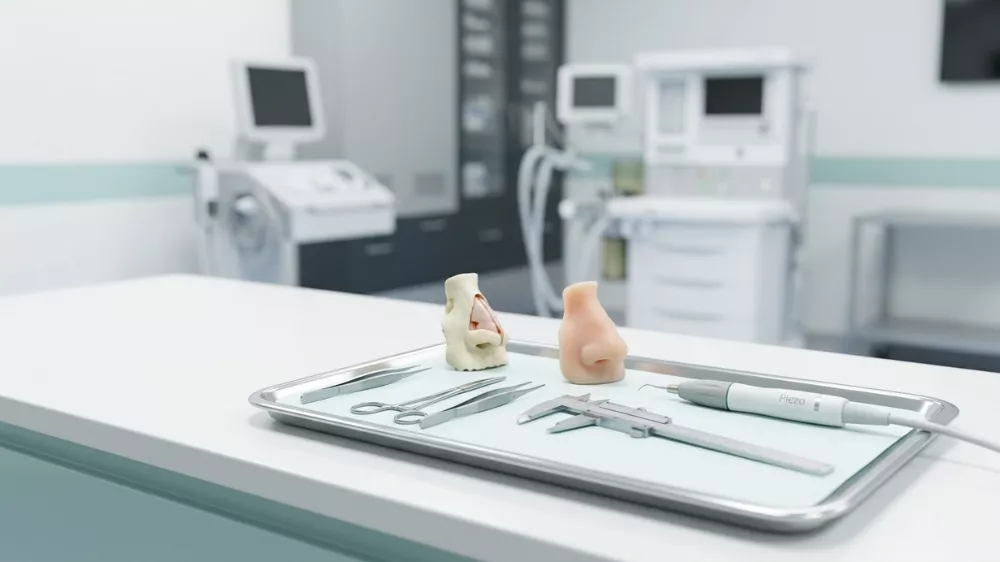
Choosing an open rhinoplasty in Turkey or closed surgery comes with advantages and disadvantages. Our plastic surgeons can give you free online advice upon consultation, but ultimately, it is the patient’s decision to choose a technique or the other. Today, we go through all the main aspects of the main two nose job techniques to help you make an informed decision. Don’t hesitate to contact us for a free online consultation with our experts.
Understanding Rhinoplasty Techniques
What is the main difference between open and closed rhinoplasty? Open rhinoplasty involves a small incision on the columella (the nasal bridge), while closed rhinoplasty is performed entirely through internal incisions. Istanbul has become a global hub for rhinoplasty in Turkey, with over 1.5 million health tourists visiting annually for all sorts of medical treatments.
Open Rhinoplasty Explained
Open rhinoplasty is often considered the best option for complex structural changes. By lifting the skin from the nose over the tip and bridge, plastic surgeons gain a clear view of the bone and cartilage, allowing for more precise modifications.
External Incision Benefits
While the thought of an external incision may concern some, the trans-columellar incision used in Turkey is typically just a few millimeters long. When performed by an expert, this scar becomes virtually invisible within months.
Better Visualization for Surgeons
The primary advantage of the open approach is total visualization. Surgeons can identify even the slightest asymmetries and place structural grafts with millimeter precision. This is particularly vital for ethnic rhinoplasty in Turkey or patients with severe trauma.
Closed Rhinoplasty Method
Closed rhinoplasty, also known as endonasal surgery, is a technique where all incisions and reshapings are conducted through the nostrils. That means, it leaves no visible signs of surgery.
No External Scarring
Because every incision is hidden inside the nose, there is zero visible scarring. This makes it a popular choice for patients seeking subtle, natural-looking refinements without any external signs of surgery.
Faster Recovery
By avoiding the columellar incision, the nasal skin’s blood supply and lymphatic drainage are better preserved. This leads to significantly less swelling and a shorter downtime compared to the open method.
Which Technique is Right for You?

How do I choose between open and closed rhinoplasty? The choice depends on your anatomical needs and goals. While closed rhinoplasty is faster, open rhinoplasty provides the precision needed for transformative changes. Is that what you’re after?
Case Study: Complex vs Simple Cases
How do Turkish surgeons decide between open and closed techniques? The choice is dictated by the degree of correction required; simple cases focus on the closed method, while complex cases require the open method’s control. Let’s look at 2 examples.
Dorsal Hump Reduction (Simple Case)
Patient Profile: A 26-year-old female seeking to remove a bridge bump without changing the nasal tip.
- The Approach:Closed Rhinoplasty.
- The Procedure:The surgeon accessed the nasal bridge through endonasal incisions. Using Piezo ultrasonic tools, the bone was smoothed without breaking the structure or cutting the columella.
- The Result:
- Surgery Time:90 minutes.
- Recovery:Patient returned to work in 6 days with zero visible scarring.
- Key Insight:For bridge-only work, the closed method preserves the “soft tissue envelope,” leading to much faster healing.
Severe Septal Deviation & Tip Reconstruction (Complex Case)
Patient Profile: A 34-year-old male with a crooked nose from a sports injury and chronic breathing issues.
- The Approach:Open Rhinoplasty Turkey.
- The Procedure:Because the septum was severely deviated, the surgeon required the open technique to harvest ear cartilage. These grafts act as internal pillars to keep the airway open.
- The Result:
- Surgery Time:5 hours.
- Recovery:Initial swelling lasted 14 days, but breathing improved by 40% immediately after splint removal.
- Key Insight:The open approach allowed for suture fixation of the grafts—something impossible to do with the limited visibility of a closed procedure.
Comparative Matrix for Patients
| Feature | Simple Case (Closed) | Complex Case (Open) |
| Primary Goal | Minor bridge refinement | Major reconstruction / Symmetry |
| Anatomical Challenge | Stable tip, straight septum | Droopy tip, deviated septum, trauma |
| Surgical Maneuvers | Rasping and minor trimming | Cartilage grafting and repositioning |
| Risk of Revision | Low | High (Reduced by using Open method) |
| Patient Priority | Minimum downtime | Maximum transformation |
Revision Surgery Considerations
If you have had a previous nose job that requires correction, open rhinoplasty is almost always mandatory. Re-operating on a nose requires the maximum visibility provided by the open technique to navigate scar tissue and cartilage deficiencies safely.
| Feature | Open Rhinoplasty | Closed Rhinoplasty |
| Incision | External (Columella) | Internal (Endonasal) |
| Visibility | 100% Direct Access | Limited / Indirect |
| Scarring | Minimal (fades over time) | None (invisible) |
| Best For | Complex/Revision cases | Minor/Moderate refinements |
| Surgical Time | 2.5 – 4 hours | 1.5 – 2 hours |
| Initial Swelling | Higher (3-6 months) | Lower (1-3 months) |
Turkish Surgeons’ Expertise in Both Methods
Turkish surgeons perform a higher volume of rhinoplasties per capita than almost any other nation, leading to a “super-specialization” where practitioners master ultrasonic (Piezo) technology to provide bone-shaping precision. Ultrasonic Rhinoplasty (Piezo) selectively targets bone while leaving blood vessels, nerves, and soft tissue completely intact.
- Precision:Surgeons can shave the nasal bridge to a fraction of a millimeter.
- Reduced Trauma:Because soft tissue is preserved, postoperative bruising is reduced by approximately 60% to 80%.
- Safety:The risk of accidental fractures (common in traditional methods) is virtually eliminated.
Recovery Differences Between Techniques
How long does it take to see the final result of a rhinoplasty in Turkey? While most patients return to social activities within 10 to 14 days, the biological healing process for a rhinoplasty is a 12-month journey which we explain below.
Phase 1: The Inflammatory Week (Days 1–7)
- Immediate Care:You will wear a thermoplastic splint and internal silicone splints to support the septum.
- Sensation:Expect stuffiness similar to a heavy cold. Open rhinoplasty patients may feel more tension at the base of the nose.
- Milestone:By Day 7, the external splint and any non-dissolvable sutures are removed at the clinic in Turkey.
Phase 2: Social Re-entry (Weeks 2–4)
- Appearance:80% of bruising usually fades by Day 10. Residual swelling is mostly concentrated in the bridge.
- Closed vs. Open:Patients who underwent closed rhinoplasty Turkey techniques often see swelling resolve 30% faster during this window because the skin’s lymphatic channels were not severed.
Phase 3: Refinement Stage (Months 3–6)
- Structural Setting:The “hardness” of the nose begins to soften.
- The 90% Rule:Roughly 90% of swelling is gone by Month 4 for closed cases, while open cases may take until Month 6 to reach this point.
Phase 4: Final Maturation (1 Year)
- The Tip:The skin finally “shrink-wraps” around the new cartilage framework.
- Stability:The internal scars have fully matured, and the new nasal structure is at its maximum strength.
Cost Variations by Technique
The cost of rhinoplasty in Turkey is highly competitive compared to the UK or USA, often saving patients up to 70%. The lower cost of rhinoplasty in Turkey averages $2,500 to $5,500.
Cost Breakdown by Complexity
| Service Tier | Estimated Cost | What is Included? |
| Standard Closed | $2,500 – $4,000 | Primary surgery, local transfers, 5 nights hotel. |
| Advanced Open | $3,500 – $5,500 | Complex tip work, Piezo technology, 6-7 nights hotel. |
| Revision Surgery | $5,000 – $8,500 | Rib/Ear graft harvesting, extended surgical time (4h+). |
*All-Inclusive Packages: Most Turkish clinics offer packages including 5-star hotel stays, VIP transfers, and post-op medications.
FAQs
Is open rhinoplasty more painful than closed?
No. Both procedures are performed under general anesthesia. Post-operative discomfort is managed with the same medication protocols; however, open rhinoplasty may involve more “pressure” sensation due to increased swelling.
Will my scar be visible after open surgery?
In 98% of cases, the columellar scar heals to a fine, faint line that is only visible if someone looks directly up your nostrils with a light.
Can I switch from closed to open during surgery?
Yes. An experienced surgeon may start with a closed approach but decide to open the nose if they discover unexpected internal complexities that require better visualization for a safe result.
How long should I stay in Turkey for the procedure?
Most surgeons recommend a 7-to-10-day stay. This allows for the initial healing phase and the removal of the external splint before you fly home.