


Male Rhinoplasty in Istanbul: Advanced Nose Surgery at Doku Clinic
Publish Date:3 June 2026

In 2026, rhinoplasty remains the most popular plastic surgery for men worldwide, accounting for 20% of all male procedures. Re-structuring the face from its focal point, male rhinoplasty enhances masculine traits while improving facial harmony. Frequently, it is also undergone to improve airway and functionality.
This guide breaksdown the latest techniques, its biggest risks, its costs and recovery. We will also provide before and after pictures and introduce our surgeons, Dr. Engin Öcal and Dr. Serkan Aygin, at Doku Clinic.
Nose Aesthetics in Men: The Straight Dorsum and Frontal Angle
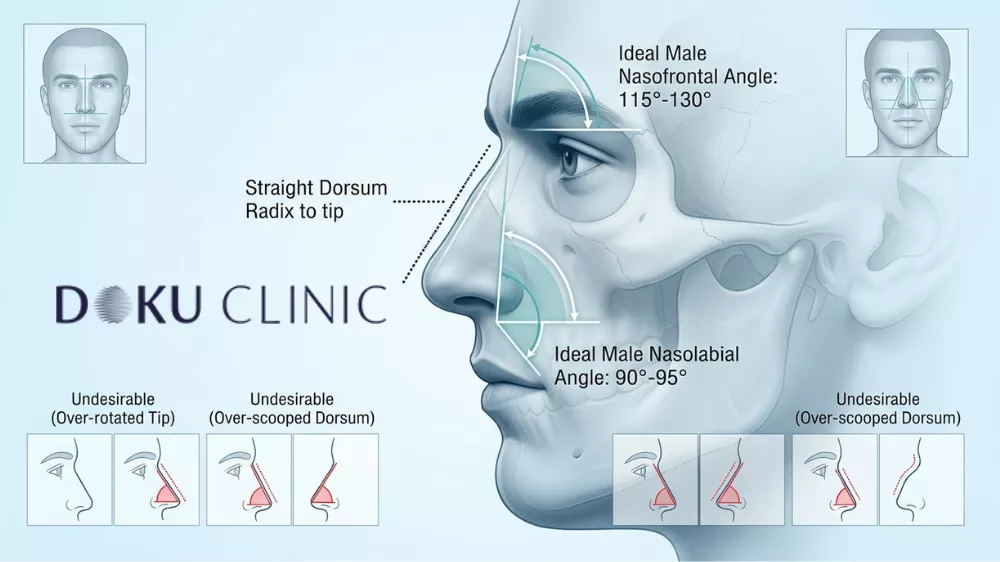
The objective of a male rhinoplasty is to carve a sharp profile without over-rotating the nose tip. Surgeons use mathematical angles to ensure the final result looks natural. For the male face, the nasofrontal angle should ideally sit between 115 and 130 degrees. Furthermore, the nasolabial angle should remain between 90 to 95 degrees. Anything higher rotates the tip upwards, creating a less masculine aesthetic.
Benefits of a Male Rhinoplasty
A male rhinoplasty is frequently used to solve breathing problems or improve aesthetics. In the first case, the most common internal issue is a deviated septum, where the cartilage dividing your nostrils is off-center. This defect blocks airflow, leading to chronic snoring, sleep apnea, and reduced oxygen while practicing sports.
When a male rhinoplasty is purely aesthetic, it is often the consequence of injury. Men are prone to nasal fractures due to accidents, and trauma. A broken nose can leave a permanent dorsal hump, an asymmetrical bridge, or a completely crooked nose that worsens breathing over time.
| Benefit Type | Specific Structural Correction | Clinical Outcome |
| Functional | Septal alignment & turbinate reduction | Eliminated airway resistance, better sleep quality |
| Post-Traumatic | Reconstruction of fractured nasal bones | Restoration of original symmetry and structural strength |
| Aesthetic | Dorsal hump reduction & tip stabilization | A straight, balanced profile that fits the jawline |
Rhinoplasty Techniques for Men
Nose surgery only differs from men to women in terms of how tissue is manipulated, but techniques remain the same. Both in men and women, there are 2 types of procedures involving either an open or a closed surgery. Let’s look at them both in detail.
The Open Male Rhinoplasty
In an open rhinoplasty, the surgeon makes a tiny incision across the columella (the strip of tissue separating the nostrils). This allows him to have complete visibility of the underlying cartilage and bone structure. For male patients at Doku Clinic, this allows our specialists to correct severe facial asymmetry caused by past sports injuries. It is the best option when significant modifications are required.
The Closed Rhinoplasty Approach
The closed rhinoplasty, or endonasal surgery, is used for minor hump reduction or bridge refinements. All surgical incisions are made completely inside the nostrils. Because there are zero external cuts, there is no risk of visible scarring on the outside of the face. Patients undergoing a closed procedure generally experience less post-operative swelling and a slightly faster recovery.
Male Nose Surgery: The Procedure Step by Step
During your consultation at Doku Clinic, we perform a clinical evaluation with 3D digital imaging to see exactly how changes to your bridge or tip will balance with your face. Once the plan is locked in, we begin blood tests and X-rays.
Surgery is performed under general anesthesia. The process follows a standardized protocol designed for maximum safety:
- Anesthesia & Incision:The surgical team administers anesthesia, and the planned incisions (open or closed) are made to access the framework.
- Dorsal Sculpting:If you have a prominent hump, the bone and cartilage are precisely shaved down using specialized instruments to create a straight, strong bridge.
- Septal Correction:If a deviated septum is present, the surgeon straightens the cartilage to immediately clear your breathing pathways.
- Tip Stabilization:The nasal tip is adjusted to hit the target 90-95 degree angle, reinforcing it with internal cartilage grafts so it does not drop over time.
- Closure & Splinting:The incisions are closed with microscopic sutures. A protective external cast and internal structural splints are applied to stabilize your new nose.
Patient Safety: Risks and Complications
Like any major surgical procedure, male rhinoplasty carries potential side effects, complications and risks that every patient must evaluate. Some of them are expected and entirely normal, while others are clear signs that something is going wrong. Let’s take a look at them in detail and learn how to make this critical distinction.
Standard Post-Op Side Effects
These are expected, temporary physiological reactions to the surgery that resolve naturally within 14 days:
- Localized Swelling:Peaks within the first 72 hours, primarily around the bridge and lower eyelids.
- Periorbital Bruising:Dark discoloration under the eyes that transitions from purple to yellow before fading.
- Temporary Numbness:Reduced sensation in the nasal tip and upper lip caused by temporary nerve stretching.
- Minor Bleeding:Light fluid drainage or oozing that requires a gauze mustache dressing for the first 48 hours.
Potential Medical Complications
These are rare clinical issues that can arise during the healing process if post-operative care protocols are compromised:
- Delayed Wound Healing:Slower closing of incision lines, primarily seen in smokers or patients with thicker skin types.
- Nasal Septal Perforation:The development of a small hole in the internal septal cartilage, which can cause whistling sounds when breathing.
- Post-Operative Infection:Bacterial entry into the surgical site, requiring immediate treatment with targeted oral antibiotics.
- Asymmetric Scarring:Uneven tissue contraction around the columella incision, leading to a visibly unaligned nasal base.
Long-Term Risks
These permanent aesthetic errors occur when a surgeon lacks specialized experience with heavy male skeletal frameworks:
- Over-Rotated Profile:Dropping the nasolabial angle past 95 degrees, resulting in an unnaturally upturned, feminized tip.
- Over-Refined Nasal Tip:Excessively pinching the cartilage, which looks disproportionate against a strong male jawline.
- Nasal Valve Collapse:Shaving too much structural bone or cartilage away from the bridge, causing the airways to cave inward during inhalation.
- Revision Necessity:Irreversible structural damage that forces the patient to undergo a secondary revision rhinoplasty to restore breathing and facial balance.
How Much Does Male Rhinoplasty Cost?
The total out-of-pocket cost for a male rhinoplasty vais often higher than what you are quoted, so this is important to clarify. In many clinics, the initial quote you receive often only covers the surgeon’s fee, meaning you will face additional separate bills for general anesthesia, operating room, and surgical materials.
In the United States, the cost of male rhinoplasty averages $10,000 to $18,000 for a primary surgery. If you require a complex reconstruction or revision rhinoplasty, the cost frequently jumps to $15,000 to $35,000+.
In the United Kingdom, the cost is £6,000 to £9,000 in standard private clinics, rising to £12,000+ in premium areas. Revision surgeries range from £9,500 to £18,000+.
At Doku Clinic, the cost of rhinoplasty in Turkey is $3,000 to $5,000 for primary surgery, and $4,500 to $8,000 for revisions. This usually covers the surgeon’s fee, hospital fees, general anesthesia, accommodation during your stay and all post-op follow-ups.
| Region / Country | Average Primary Cost | Average Revision Cost |
| United States | $10,000 – $18,000 | $15,000 – $35,000+ |
| United Kingdom | £6,000 – £9,000 | £9,500 – £18,000+ |
| Overseas (Turkey) | $3,000 – $5,000 | $4,500 – $8,000 |
Post-Op Recovery and Aftercare
Your profile will look new within the first month post-op, but microscopic refinements take up to 12 full months to complete. This is why strict adherence to your surgeon’s post-op protocol can actually make a significant difference in results.
The initial recovery phase of male rhinoplasty takes roughly 7 to 10 days, during which the protective splint must remain completely dry and undisturbed. You must avoid any direct facial impact or heavy contact sports for a minimum of 6 weeks post-surgery to ensure the nasal bones fully fuse into their new positions.
- Days 1–3:Expect swelling and bruising around the lower eyelids. Sleep with your head elevated at a 45-degree angle to accelerate fluid drainage.
- Day 7:Your surgeon will remove the external fiberglass cast and any internal silicone splints. The nasal airway is gently cleansed.
- Weeks 2–4:Minor bruising fades completely. Most male patients return to standard desk work and light social activities.
- Month 2:Residual swelling decreases by 80%. You may gradually reintroduce moderate cardiovascular exercise.
Male Rhinoplasty Before and After
When looking at photographic evidence, a high-quality clinical result must show clear, parallel dorsal aesthetic lines and a stable nasal tip that maintains its position when smiling.
Pay close attention to the structural changes on the profile view. The bridge should show a straight, strong line without any residual humps or over-scooped depressions.
Why Choose Doku Clinic for Male Rhinoplasty?
At Doku Clinic, your care is directed by elite specialists with decades of combined clinical experience in one of the best facilities in Istanbul, Turkey. Here are the top reasons to consider male rhinoplasty with our experts.
Dr. Serkan Aygin and Dr. Engin Öcal
The surgical department is led by Dr. Engin Öcal, a highly regarded specialist in facial surgery, alongside the clinical vision of Dr. Serkan Aygin. Their collaborative framework ensures that every incision, graft placement, and nasal realignment is tailored precisely to your tissue thickness and structural goals, minimizing the risks of long-term nasal valve collapse.
State-of-the-Art Infrastructure
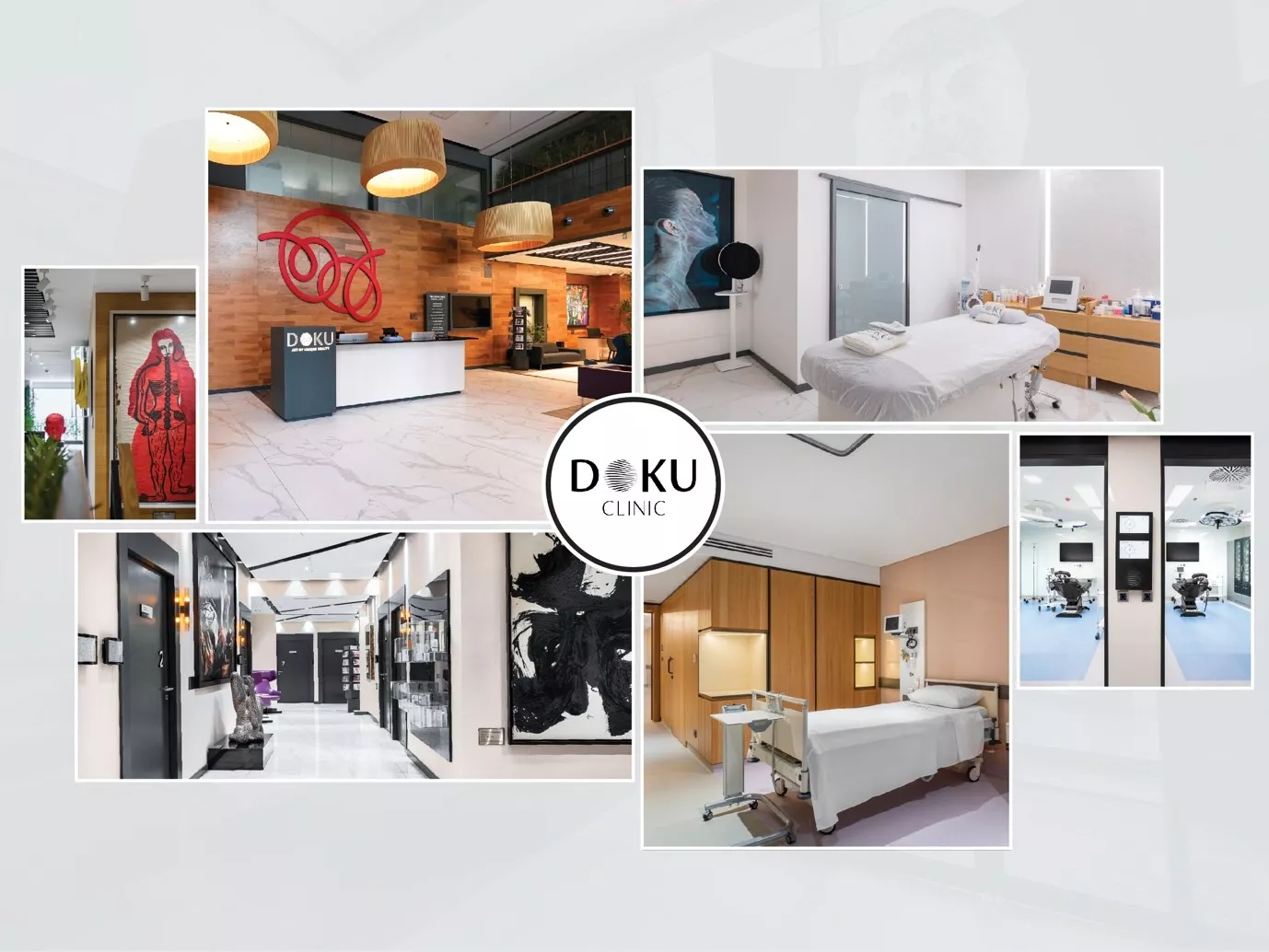
Operating within a high-tier clinic influences patient safety and surgical precision. Doku Clinic utilizes advanced medical technologies, including high-precision tools that shape nasal bones without causing unnecessary trauma to the surrounding soft tissues, significantly reducing post-operative bruising.
FAQs
Will a male rhinoplasty look unnatural?
No. The procedure is explicitly planned to maintain your facial character. Our surgeons avoid over-rotating the tip or creating an overly narrow bridge, ensuring the results look completely natural and cohesive with your existing jawline and brow structure.
How long does the surgery take?
A primary male nose surgery typically takes between 90 to 150 minutes, depending on the extent of the bone and cartilage modification required. Complex reconstructive or revision cases involving cartilage grafting can take longer.
Is the recovery painful?
Most patients report a feeling of nasal congestion and pressure rather than sharp pain. The internal silicone splints allow for partial breathing, and any post-operative discomfort is easily managed with standard prescribed medications during the first 3 to 5 days.
When can I return to the gym and lift weights?
Light walking can begin immediately after surgery. However, you must avoid heavy lifting, running, and high-intensity workouts for at least 3 to 4 weeks, as elevated blood pressure can cause internal bleeding and prolong swelling.
How long do the results last?
The changes made during a male rhinoplasty are permanent. While your face will naturally age over time, the physical modifications made to the underlying bone and cartilage will remain stable for life.