Breast Lift Without Implants: A Medical Guide to Natural Mastopexy
Last Update:29 June 2026
This article was written by Doku Clinic’s editorial team and reviewed, edited and approved by Dr. Engin Öcal, MD.
Sagging breasts (medically known as breast ptosis) were traditionally treated by cutting excess skin and adding mass with implants. Recently, patient preferences have changed. Modern plastic surgery is inclined towards body sculpting rather than using silicone or saline implants. Tissue manipulation (a breast lift without implants), reshapes your breasts using exclusively what your body has. In this article, we share all crucial information about the procedure in a clear, illustrative format for patients.
A breast lift without implants—clinically called an isolated mastopexy—is a cosmetic surgery designed to reshape, elevate, and firm sagging breasts. Unlike breast augmentation, this procedure does not introduce foreign prosthetics like silicone or saline implants into the body. The objective is to remove excess, stretched skin alone, without adding any volume.
Who is the Ideal Candidate?
The ideal candidate for a breast lift without implants is a woman who is generally satisfied with her current breastvolume but wishes to correct drooping, flatness on the upper slope, or stretched skin. Conditions that must be met prior to surgery include:
Enough Breast Volume: The patient must have enough breast tissue to achieve a well-projected shape through auto-augmentation.
Stable Body Weight: Major weight loss or gain after surgery will stretch the skin envelope again.
No Future Pregnancies: Subsequent pregnancies will alter breast shape and stretch the lifted tissue.
Good Health: Non-smokers (or patients able to quit 4 weeks pre- and post-op) with no chronic medical conditions that could impair healing.
Realistic Expectations: Understanding that surgery restores a youthful shape but cannot replicate the stiff upper-pole fullness of synthetic silicone.
The 3 Degrees of Breast Ptosis
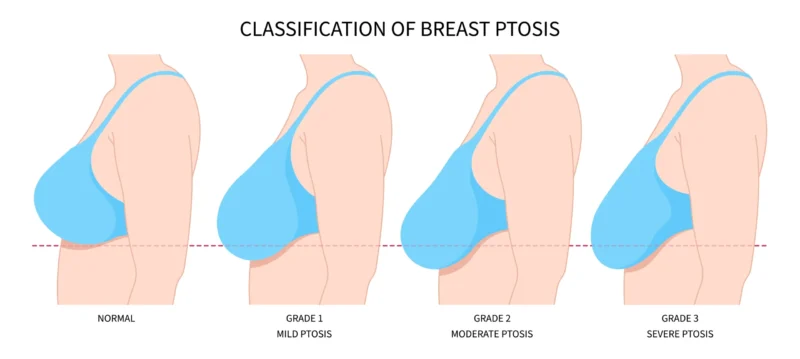
At Doku Clinic, our plastic surgeons utilize the Regnault Classification to plan your breast lift without implants. This scale measures breast ptosis by looking at the exact position of the nipple relative to the infra-mammary fold (the crease where the lower breast meets the chest wall).
Grade I (Mild Ptosis): The nipple is positioned exactly at the level of the infra-mammary fold, but the lower breast tissue hangs slightly below it.
Grade II (Moderate Ptosis): The nipple has dropped below the line of the infra-mammary fold, but it remains higher than the lowest contour of the lower breast curve.
Grade III (Severe Ptosis): The nipple sits significantly below the infra-mammary fold and points directly downward toward the floor.
Pseudoptosis (False Sagging): The nipple remains positioned well above the infra-mammary fold, but the lower half of the breast has lost volume and sags downward.
Our Patients’ Before and Afters
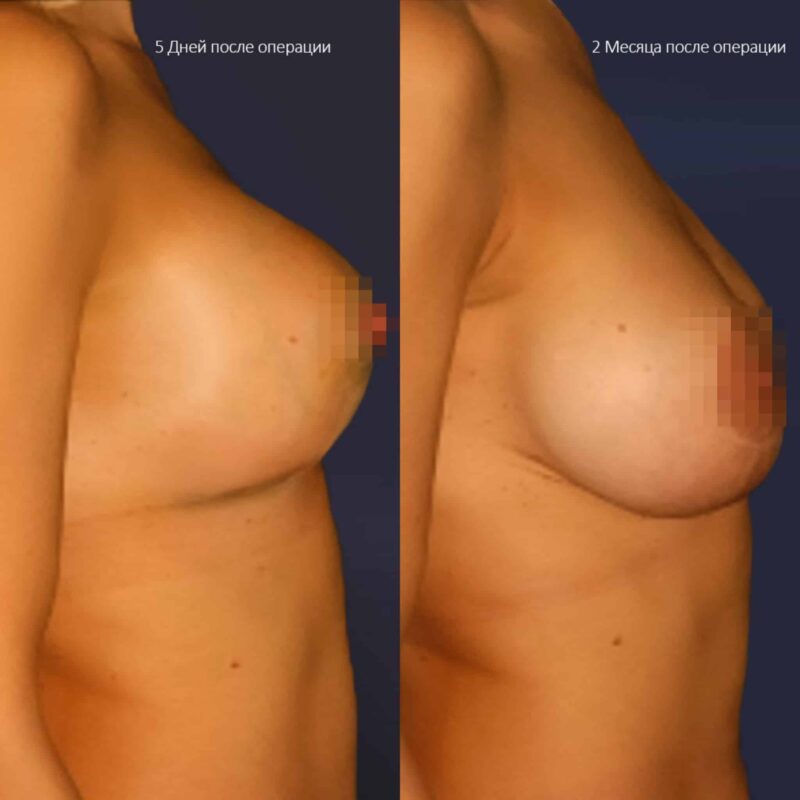
These documented cases serve as visual evidence of how a breast lift without implants repositions the entire breast.At Doku Clinic, our portfolio highlights the surgical craftsmanship of Dr. Engin Öcal. When analyzing these case studies, pay close attention to the elevation of the nipple-areola, the restoration of the lower breast curve, and how the overall proportions align harmoniously with the patient’s torso.
Key Visual Changes to Observe
Nipple Repositioning: Notice how nipples that previously pointed downward or sat below the breast crease are lifted to point straight ahead
Areola Resizing: Many patients experience stretched areolas due to skin laxity; the post-op outcomes show a reduction to a smaller, symmetrical, circular diameter.
Upper Pole Cleavage: Look at the upper quadrant of the breast. While it will not exhibit the roundness of a silicone prosthetic, you will see a smooth, distinct slope.
Tissue Consolidation: Observe how the breast appears tighter, more compact, and structurally anchored to the chest wall, eliminating the deflated or empty look.
Techniques and Incisions for a Breast Lift Without Implants
The success of a mastopexy in Turkeydepends on the incision. The choice of technique is dictated by your grade of breast ptosis, the amount of excess skin, and your skin’s elasticity. At Doku Clinic, reconstructive experts like Dr. Engin Öcal ensure the internal tissue remains stable long-term, while placing external lines where they can fade naturally over time.
Crescent Mastopexy
The crescent mastopexy is the least invasive lifting. It involves making a single, semi-circular incision along the top half of the areola border. A small, crescent-shaped piece of skin is removed, and the remaining tissue is pulled upward and sutured to elevate the nipple.
Best Suited For: Patients with mild Grade I ptosis or pseudoptosis
Scar Visibility: Extremely discrete, the scar blends into the pigment transition at the edge of the areola.
Volume Restructuring: Very limited; it cannot fix severe tissue sagging or significantly reshape the lower breast.
Donut (Periareolar) Lift
The donut lift—medically known as a periareolar mastopexy—extends the incision completely around the perimeter of the areola. A circular ring of skin is removed, resembling a donut, and the skin envelope is pulled tight toward the center, much like a purse string.
Best Suited For: Moderate sagging or patients who require a significant reduction in the size of stretched areolas.
Scar Visibility: Hidden entirely along the border of the areola, making it a highly desirable choice for scar-conscious patients.
Clinical Benefit: Allows the surgeon to reshape the central breast contour and correct asymmetry with minimal external marks.
Vertical (Lollipop) Breast Lift
The vertical mastopexy is one of the most frequently performed techniques in modern plastic surgery. It requires two incisions: a circular pathway around the areola and a straight vertical line running down from the bottom of the areola to the infra-mammary fold.
Best Suited For: Moderate-to-severe Grade II ptosis where substantial excess skin needs to be removed.
Scar Visibility: Resembles the shape of a lollipop; the vertical line is visible on the lower breast but fades significantly under a proper post-op scar regimen.
Clinical Benefit: Provides excellent access for tissue auto-augmentation, allowing the surgeon to narrow the breast base and create robust upper-pole projection.
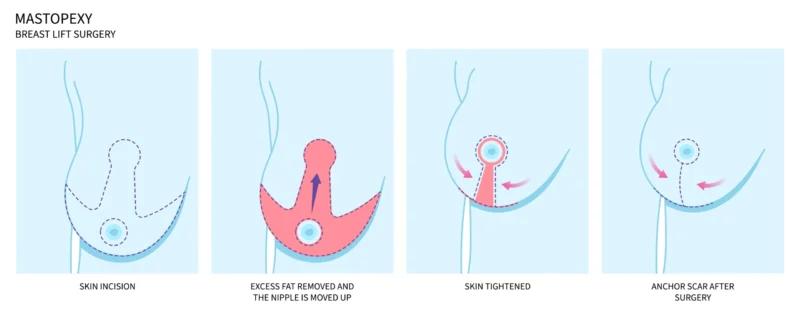
Inverted-T (Anchor) Mastopexy
The inverted-T mastopexy is considered the best for complex breast reshaping. It utilizes three incision lines: one around the areola, a vertical line running down the lower breast, and a horizontal incision placed along the natural crease of the infra-mammary fold.
Best Suited For: Severe Grade III ptosis or cases following massive weight loss
Scar Visibility: Follows the shape of a classic maritime anchor; the horizontal scar is concealed completely by standard swimwear and bras.
Clinical Benefit: Gives the surgeon total anatomical freedom to excise large skin volumes, lift highly dropped tissues, and dramatically re-sculpt the entire breast.
The Surgical Journey Step by Step
Undergoing a breast lift without implants involves prioritizing safety and surgical precision. At Doku Clinic Istanbul, the whole process is managed by an medical team operating under international hospital standards. Every phase of your treatment is coordinated.
Pre-Operative Assessment
During this phase, your plastic surgeon conducts a physical examination to evaluate your specific anatomy, tissue density, and chest proportions. This is also the time to design surgery with the patient hand-in-hand, ensuring alignment and clear expectations.
Marking Your New Contour: Dr. Engin Öcal uses marking to map the new positions of your nipple-areola, ensuring perfect symmetry and projection.
Medical Clearance: Patients undergo complete health screenings, including blood panels, electrocardiograms (ECG), and a mammogram or breast ultrasound.
The Surgical Procedure
Once pre-operative clearance is finalized, the patient is transferred to the operating room, where surgery takes place.
Anesthesia: The procedure is performed under general anesthesia, administered by board-certified anesthesiologists, ensuring absolute patient safety and comfort throughout the 2 to 3-hour surgery.
Incisions and Skin Excision: The surgeon makes the predefined incisions based on your selected technique (Crescent, Donut, Lollipop, or Anchor) and carefully removes the stretched, redundant skin patches.
Internal Auto-Augmentation: Instead of using silicone prosthetics, the surgeon internally mobilizes and stacks your lower sagging breast tissue upward, anchoring it securely to the pectoral fascia to build upper-pole fullness.
Wound Closure: The remaining skin envelope is gathered and closed using intradermal, dissolvable sutures, which eliminates painful stitch removal during your recovery.
Recovery and Post-Op Care
Your adherence to clinical protocols ensures that the internal healing layers solidify correctly without stretching.Following the instructions provided by your surgical team reduces the risk of scar widening, prevents asymmetry, and accelerates your return to normal life. At Doku Clinic, patients receive medical garments and personal care to guarantee optimal healing.
The First 48 Hours
The immediate post-op window focuses entirely on stabilization, pain management, and tissue monitoring.
Clinical Stay: Patients typically remain in our private hospital room for the first 24 hours under continuous supervision to track vitals and initial fluid drainage.
Surgical Drains: Small, temporary plastic drains may be placed beneath the skin to evacuate fluid accumulation.
Expected Symptoms: Expect localized swelling, moderate bruising, and tight sensations across the chest wall. Any pain is managed with
Mobility Rules: Absolute bed rest is discouraged; light, assisted walking down the hospital corridors is encouraged to promote healthy blood circulation.
Weeks 1 to 2
This phase marks the transition to independent home care.
The Compression Bra: Patients must wear a specialized medical support compression bra 24 hours a day.
Activity Restrictions: You may return to light desk work or walking, but lifting heavier than 5 kilograms or raising your elbows above shoulder is prohibited.
Wound Hygiene: Clean your incision lines daily according to the clinic’s antiseptic protocols.
Sleeping Position: Patients must sleep exclusively on their back, elevated by a few pillows, to prevent accidental compression or lateral shifting.
Months 1 to 6
The final phase involves scar maturation, the end of swelling and the long-term settling of the natural breast shape.
Gradual Softening: Around week 4, the initial tight appearance will begin to soften. Internal breast tissue naturally drops into a soft position on the chest wall.
Scar Management: Incision lines will appear pink or slightly raised during the first two months. Apply medical-grade silicone scar gels or patches to help them fade.
Resume Exercise: Light cardio can be resumed after week 4, but high-impact running and heavy weight lifting must be avoided until week 6.
How Long Do Results Last For?
For most patients, results remain stable for 10 to 15 years, or even longer. The excess skin removed during breast lift without implants cannot grow back. However, surgery cannot stop the aging process. Your breasts will continue to change over time under the influence of natural forces. The exact longevity depends on post-op care, tissue genetics, and lifestyle habits.
Main Factors for Long-Term Firmness:
Skin Elasticity and Genetics
Weight Stability
No More Pregnancies
Continuous Bra Support
Healthy Lifestyle Habits
Why Mastopexy Has Traditionally Required Implants (and Its Limitations)
The main limitation of a breast lift without implants is that it cannot create new volume; it can only redistribute what is already present. Historically, plastic surgeons struggled to provide long-term fullness in the upper part of the breast using sagging tissue alone. This is why combining a lift with an implant ensures an ideal, rounded silhouette.
Disadvantages of a Breast Lift Without Implants
Lack Upper Pole Projection: A silicone implant provides a permanent, semi-rigid shelf that forces the upper part of the breast to look full. An isolated lift delivers a much softer, gentler, and sloped contour.
Longevity of Results: Synthetic implants, especially textured or anatomical options, resist gravitation and usually ensure longer-lasting results.
Inability to Correct Severe Deflation: If a patient has lost massive amounts of weight, the remaining breast tissue often resembles an empty skin sac. In these scenarios, there is not enough mass available to create a firm shape.
Mastopexy With vs. Without Implants
To provide absolute clarity for our patients at Doku Clinic, our medical board balances aesthetic goals against anatomical limitations. Below is a clinical comparison designed by our reconstructive team, including Dr. Engin Öcal, to help you visualize the distinct outcomes, surgical profiles, and long-term behaviors of both operations:
Clinical Feature
Mastopexy Without Implants
Mastopexy With Implants
Primary Objective
Restores shape, tightness, and position using native tissue.
Restores structural position AND adds synthetic fullness/volume.
Volumetric Change
None. Relies entirely on your existing glandular volume.
Increases cup size based on the selected silicone prosthetic cc.
Upper Pole Contour
Creates a soft, natural, and gently sloped upper cleavage.
Delivers a high, rounded, and pronounced push-up appearance.
Result Longevity
Highly stable for 10-15 years; subject to natural tissue aging.
Long-lasting upper fullness; may require implant updates later.
Scarring Profile
Dependent on ptosis grade; leaves identical or smaller footprints.
Identical skin incisions but requires deep internal tissue pockets.
Long-term Risks
Limited to natural aging and standard surgical healing variations.
Includes capsular contracture, implant rupture, or displacement.
Mechanical Weight
Light. Uses the body’s own fluid, soft tissue architecture.
Heavy. Adds physical mass, which can stress thin skin envelopes.
Potential Risks & Side Effects of Breast Lift Without Implants
A mastopexy without implants is an established and safe surgery. However, as with any operation performed under general anesthesia, it carries surgical risks that a patient must carefully consider.
Common Post-OP Complications
These side effects are standard biological responses to surgery and typically resolve during the initial recovery weeks.
Localized Edema and Bruising
Temporary Changes in Sensation
Mild Asymmetry
Surgical Scarring
Rare Complications
These issues occur in a very low percentage of cases and require direct medical management or intervention.
Hematoma or Serom
Delayed Wound Healing
Fat Necrosis
Partial Nipple Necrosis
How to Minimize Surgical Risks
Choose a Board-Certified Surgeon: Undergoing surgery with highly experienced reconstructive experts like Engin Öcal minimizes technical errors.
Strictly NO Smoking: Nicotine constricts blood vessels and severely starves healing tissues of vital oxygen.
Activity Restrictions: Avoiding premature heavy lifting or strenuous exercise.
Compression Garment Use: Wearing the mandated medical support bra 24/7 stabilizes the tissue layers, reduces swelling, and shields healing structures.
How Much Does a Breast Lift Without Implants Cost?
On a global scale, the cost for a surgical breast lift without implants ranges from $2,600 on the lowest end to over $16,000. Clinics and doctors generally charge separately for each component of the procedure (surgeon fees, anesthesia, and operating room).
Breast Lift Cost in the USA
In the USA, the total cost for a breast lift without implants typically ranges from $8,000 to $15,000, with a national average sitting at approximately $8,128. However, most quotes only state the surgeon’s professional fee (which averages $6,816). Patients must pay out-of-pocket for additional separate costs, including:
Hospital or surgical facility utilization fees ($1,500 – $3,000).
Pre-op mammograms, post-op medical garments, and prescriptions ($300 – $600).
Breast Lift Cost in the UK
Private breast lift surgery in the UK ranges from £4,800 to £11,000, with premium London clinics averaging around £7,800. It is almost never covered by the NHS or private health insurance. A standard UK package covers:
The primary consultant surgeon and anesthesia fees.
The physical operating theater and standard surgical supplies.
One post-operative follow-up appointment at the local clinic.
Breast Lift Cost in Turkey
In 2026, an all-inclusive breast lift package in Istanbul ranges from €2,700 to €4,900 (approx.$2,900 – $5,250 USD). Institutions like Doku Clinic offer all-inclusive packages. There are zero hidden fees for international patients. The packages cover:
Full surgery by a top plastic surgeon like Engin Öcal.
General anesthesia, pre-operative blood work, ECG, and mandatory medical imaging.
Overnight stay in a private hospital room with full nursing care.
5-star hotel accommodation for your remaining recovery nights in Istanbul.
All premium VIP transfers (Airport – Hotel – Clinic).
Post-surgical compression bras, recovery medications, and lifetime remote aftercare tracking.
Non-Surgical Alternatives to Mastopexy
It is vital to understand that these treatments operate under strict limits. A non-surgical breast lift (also known as natural breast lift) cannot excise loose skin, relocate internal tissue, or lift a significantly dropped nipple-areola. In general, non-surgical options are only suitable for patients with very mild skin laxity or pseudoptosis.
Laser Treatments and Radiofrequency
Laser treatments and non-invasive radiofrequency (RF) systems—such as Thermage or BodyTite—work by delivering thermal energy into the dermal layers of the chest skin. This heating causes contraction of collagen fibers and triggers a long-term collagenesis response, tightening the external skin.
Clinical Reality: These energy devices only affect the superficial skin layers; they cannot fix stretched internal structural ligaments (Cooper’s ligaments).
Expected Outcomes: Patients with minimal Grade I ptosis may notice a subtle, temporary effect and improved skin texture.
Maintenance: Results are minor and require repeated, ongoing clinical sessions every few months.
Plasma Renuvion and Thread Lifts
Plasma Renuvion (J-Plasma) combines helium gas with radiofrequency to create a plasma flame. Inserted via tiny subdermal punctures, it heats underlying tissues to contract skin. Thread lifts, on the other hand, utilize absorbable polydioxanone (PDO) threads inserted under local anesthesia to pull skin upward toward the collarbone.
The Renuvion Limitation: While excellent for tightening skin after liposuction, Renuvion cannot hold heavy, sagging breast tissue against gravity over time.
The Thread Lift Reality: PDO threads act as a temporary internal scaffold and results dissolve completely after18–24 months maximum.
Medical Verdict: These alternatives frequently require many sessions, making them inefficient and expensive.
FAQs
Will a breast lift without implants reduce my cup size?
No, but your breasts will appear more compact. An isolated mastopexy only removes excess skin, not internal tissue. However, tightening the structural envelope compresses the native tissue, which can visually reduce your apparent cup size by about one notch.
Can I safely breastfeed after an isolated mastopexy?
Yes, in the vast majority of cases. Because advanced surgical techniques preserve the underlying milk ducts and critical blood supply attached to the nipple-areola complex, future lactation remains entirely functional. Only severe corrections present a minimal risk of reduced volume.
How long after pregnancy should I wait to get a breast lift?
You must wait at least 6 months after breastfeeding concludes. This delay ensures your breast tissue has completely shrunk to its stable, post-pregnancy baseline and local hormone levels have normalized, allowing Dr. Engin Öcal to perform highly accurate surgical markings.
What is the difference between a breast reduction and a breast lift?
A reduction alters volume; a lift alters position. A breast reduction actively removes heavy internal glandular tissue and fat to decrease weight. An isolated mastopexy only tightens skin and elevates existing tissue without decreasing your biological mass.
Can fat transfer be combined with a natural breast lift?
Yes, this is a popular hybrid approach called auto-augmentation. If you want minor upper pole fullness without synthetic implants, surgeons can harvest fat via liposuction from your abdomen or thighs and strategically inject it into the lifted breast.
When is it completely safe to return to exercise?
Light walking is required immediately, but strenuous workouts require 6 weeks. You can resume light cardio around week 4. However, heavy lifting, running, or chest-specific exercises must be avoided until your internal anchors fully heal.