


SMAS Facelift: Long-Lasting Facial Rejuvenation at Doku Clinic
Publish Date:18 May 2026
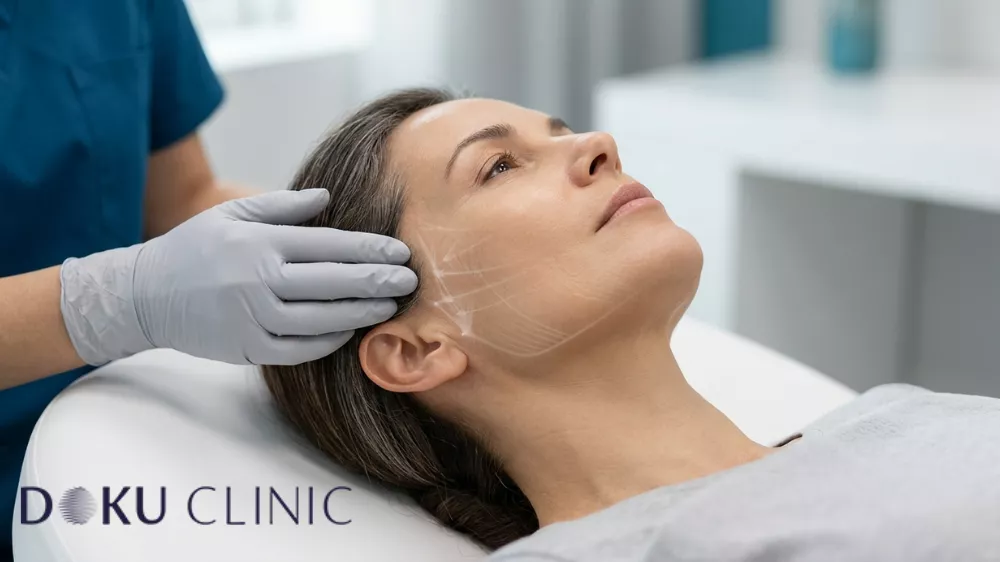
A SMAS facelift is an advanced facial rejuvenation technique that focuses on the deeper layers of the face, effectively treating jowls, sagging skin and deep nasolabial folds. The procedure targets the lower two-thirds of the face, repositioning the muscular structures and the fibrous tissue. Because the tension is placed on the deeper SMAS layer, the results are more durable tan traditional lifts and the scarring practically invisible to the naked eye.
The SMAS Layer in Facial Anatomy
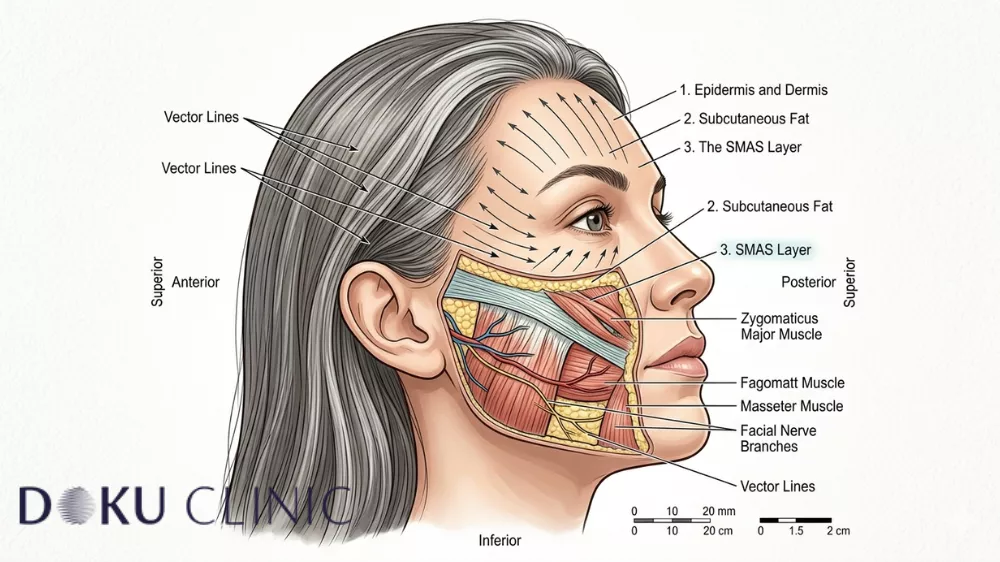
Identifying the SMAS anatomy is crucial for a successful surgery. The SMAS layer is a thin but strong tissue that connects the facial muscles to the skin. Anatomically, it acts as the primary support system for the mid and lower face.
By elevating and securing this layer, Doku Clinic doctors can restore the facial volume to its youthful position. This approach ensures that the facial expressions remain fluid and authentic, providing a refreshed look that looks like a younger version of yourself.
Traditional Facelift vs. SMAS Technique
Traditional facelift surgery focused on removing excess skin. This provided immediate results, but often short-lived and could look distorted. In contrast, the SMAS technique treats the face as a complex structure of layers, ensuring long-lasting natural results that last 10 to 15 years.
SMAS Facelift Surgery Step-by-Step
A SMAS facelift at Doku Clinic is a calibrated surgical intervention. The process is divided into clinical phases, each designed to maximize patient safety.
Pre-Operative Consultation and Planning
The journey begins with a facial analysis. During this phase, facial plastic surgeons evaluate skin quality, bone structure, and SMAS laxity. Digital imaging maps the facial nerves to ensure maximum safety during the dissection.
Key elements of Doku Clinic’s pre-operative protocol include:
- Medical History:A thorough assessment of cardiovascular health and blood coagulation parameters.
- Skin Elasticity Testing:Determining the recoil capacity of the dermis to plan the precise amount of skin redraping.
- Vector Planning:Surgeons identify the vertical and diagonal vectors required to lift the malar fat pads without distorting the earlobes or hairline.
- Anesthesia Plan:Coordination with our anesthesiology department to determine the safest sedation route for the patient’s profile.
How the Procedure Unfolds
In a High-SMAS or Extended SMAS technique, the incision usually starts in the temple hair, continues down in front of the ear (pre-auricular), and wraps around the earlobe to the posterior scalp. This ensures that scars are hidden within natural folds.
The technical core of the surgery involves:
- Skin Undermining:A layer of skin is gently separated from the underlying tissue.
- SMAS Dissection:The surgeon carefully incises the SMAS layer. This is the most critical step, requiring an intimate knowledge of the retaining ligaments (such as the zygomatic and masseteric ligaments) that must be released to allow for a true vertical lift.
- Repositioning and Fixation:The SMAS flap is lifted and secured to the stable parotid-masseteric fascia using high-tensile, biocompatible sutures. This provides the structural internal support for the face.
- Redraping:The skin is laid back over the new foundation. Importantly, it is never pulled tight; any excess is meticulously trimmed, and the edges are closed with micro-sutures to prevent scar widening.
Benefits of a SMAS Facelift
Our doctors can restore the “Triangle of Youth” by targeting the Submuscular Aponeurotic System. That’s a term used by aesthetic experts to describe the high cheekbones and defined jawline characteristic of a young face. This procedure doesn’t just make you look younger; it restores the structural integrity of your face, providing a foundation that will continue to age more gracefully over time than if the surgery had not been performed.
Long-Term Results and Natural Aesthetics
According to international surgical protocols, the success of the procedure depends 30% on planning, 50% on surgical execution, and 20% on the recovery environment. Clinical studies indicate that SMAS facelift results typically last between 10 to 12 years. Patients often report a boost in self-confidence as their outward appearance matches their internal vitality.
Are You a Good Candidate for a SMAS Facelift?
While most patients are between 45 and 65, candidacy is determined by indicators that suggest non-surgical treatments (like fillers or HIFU) will no longer provide a satisfactory result. A good candidate typically has concerns that only a deep-tissue SMAS intervention can correct:
- Mid-face Ptosis:The malar fat pads (cheeks) have shifted downward, leading to a hollowed look under the eyes and heaviness near the mouth.
- Advanced Jowling:Significant loss of definition along the jawline where the skin and SMAS layer have descended past the mandibular bone.
- Deep Nasolabial Folds and Marionette Lines:Permanent creases that remain visible even when the face is at rest, caused by the descent of internal structures.
- Platysmal Banding:Visible vertical bands in the neck or “turkey neck” laxity that requires structural repositioning.
Health and Lifestyle Requirements
Candidates must meet the following medical requirements to be accepted by Doku Clinic plastic surgeons:
- Stable Body Mass Index (BMI):Significant weight fluctuations after a facelift can compromise the results. We recommend being at your goal weight before surgery.
- Non-Smoking Status:Nicotine is a potent vasoconstrictor. Candidates must be willing to cease smoking at least 4 weeks before and after surgery to prevent skin necrosis and delayed healing.
- Managed Medical Conditions:Chronic conditions like hypertension or diabetes must be strictly controlled to minimize intra-operative risks.
- Realistic Expectations:A SMAS facelift provides a “refreshed” and “younger” version of yourself; it does not change your fundamental facial identity.
Recovery and Post-Operative Care
The recovery phase at Doku Clinic is managed with the same level of clinical rigor as the surgery itself. Modern techniques have significantly reduced the downtime. Our tissue-handling techniques allow most patients to return to social activities within 14 to 21 days.
Immediate Post-Surgery
Immediately following the procedure, a compression bandage is applied to minimize edema (swelling) and prevent hematoma. Patients typically spend the first night under the direct supervision of our clinical staff in our Istanbul clinic.
- Days 1-3:Peak swelling and minor bruising are normal. Pain is managed effectively with mild oral analgesics.
- Days 5-7:The first set of sutures is removed. Patients begin to see the new contour of their jawline.
- Activity Level:We encourage light walking within 48 hours to promote circulation, but strenuous exercise and heavy lifting are strictly prohibited for at least 4 weeks.
Long-Term Healing
True remodelling of the tissues occurs over several months and up to a year. At Doku Clinic, we provide long-term guidance on maintaining surgical results through medical-grade skincare and non-invasive maintenance treatments.
To preserve the integrity of the SMAS lift, we recommend:
- Strict Photoprotection:UV radiation breaks down the collagen that holds the SMAS sutures in place!
- Hyperbaric Oxygen Therapy (Optional):Available for patients who wish to accelerate tissue oxygenation and healing.
- Nutrition:A high-protein, antioxidant-rich diet to support the synthesis of new dermal matrix.
Understanding and Mitigating Surgical Risks
All surgical interventions carry inherent risks. Acknowledging these risks is the responsibility of medical integrity. Our clinic and personnel are specifically prepared to minimize the probability of complications through pre-operative screening and intra-operative technology.
Potential Complications of Facial Surgery
According to the American Society of Plastic Surgeons, the complication rate for facelifts is low, but patients should be aware of the following possibilities:
- Hematoma:The most common risk (occurring in approximately 1-2% of cases), involving a collection of blood under the skin. We mitigate this through hemostasis and, if necessary, the use of temporary surgical drains.
- Nerve Injury:Temporary weakness in facial muscles can occur due to inflammation near the facial nerve branches. Permanent injury is extremely rare
- Infection:Though rare in facial surgery due to the face’s excellent blood supply, we administer prophylactic antibiotics as a standard safety measure.
- Skin Necrosis:This is primarily a risk for smokers, as nicotine constricts blood vessels. This is why we mandate a strict tobacco cessation period before and after the procedure.
- Asymmetry:Minor differences between the two sides of the face are natural, but our surgeons use vector mapping to ensure the most symmetrical result possible.
Why Choose Doku Clinic for Your Facial Surgery
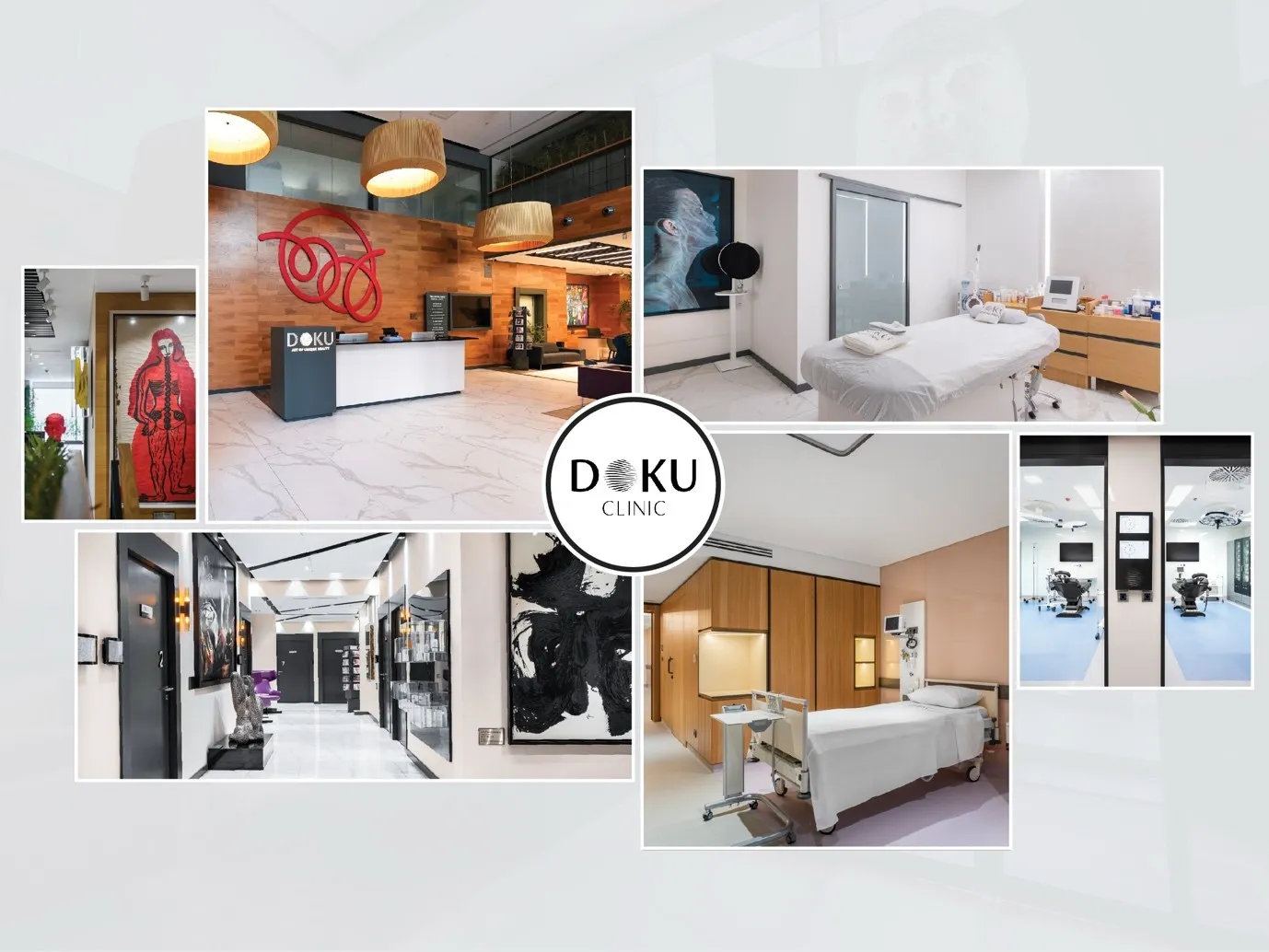
Doku Clinic stands out as a premier destination for medical tourism, combining world-class surgeons with a humane, hospitable approach. Our facility is equipped with cutting-edge technology designed specifically for facial plastic surgery, ensuring that every procedure is performed with the utmost safety and accuracy.
Our medical team ensures that each patient receives a treatment plan tailored to their unique bone structure and aging patterns. This commitment to excellence is why thousands of international patients trust us for their facial rejuvenation every year.
Expert Surgeons and Advanced Medical Infrastructure
At Doku Clinic, our surgeons are recognized specialists in maxillofacial and plastic surgery, possessing extensive experience in handling the delicate SMAS layer. Our infrastructure includes state-of-the-art operating theaters and specialized recovery suites. We utilize 3D imaging technology during the consultation phase to help patients visualize potential outcomes, ensuring that expectations are aligned with surgical possibilities. This approach, paired with our doctors’ mastery of micro-suturing, ensures that incisions are nearly invisible, leaving no trace of the surgical intervention.
Personalized Patient Care in the Heart of Istanbul
At Doku Clinic, we believe that the patient journey begins long before the first incision. Each patient is assigned a dedicated coordinator to assist with every aspect of their trip to Istanbul, from airport transfers to post-operative follow-ups. We understand that traveling for surgery can be stressful, so we prioritize a seamless experience that allows you to focus entirely on your recovery and transformation.
Our personalized care plans include:
- Multilingual staffto facilitate clear communication between the patient and the medical team.
- Customized post-operative recovery kitsdesigned to optimize healing and comfort.
- Continuous monitoringby our nursing staff during the initial 24-48 hours after surgery.
Doku Clinic Safety Advantage
At Doku Clinic, we don’t just manage risks; we proactively prevent them. Our surgical suites are equipped with HEPA filtration systems to ensure a sterile environment, and our anesthesia team utilizes real-time hemodynamic monitoringthroughout the entire procedure.
Furthermore, our post-operative follow-up protocol includes daily checks during your first week in Istanbul, ensuring that any signs of inflammation or suboptimal healing are addressed immediately by the surgical team. This “safety-first” culture is why Doku Clinic maintains one of the highest safety ratings for international patients in Turkey.
FAQs
How long do the results of a SMAS facelift last?
Typically, the results of a SMAS facelift last between 10 and 15 years. While the surgery “turns back the clock,” it does not stop it. Your face will continue to age, but you will always look significantly younger than you would have without the procedure. Maintaining a stable weight and a rigorous skincare regimen will extend these results.
Is the SMAS facelift procedure painful?
The procedure itself is performed under general anesthesia or deep sedation, meaning you will feel no pain during surgery. Post-operatively, most patients describe the sensation as “tightness” or “heaviness” rather than acute pain. Doku Clinic doctors prescribe specialized analgesics to ensure your comfort during the first 48–72 hours of recovery.
Am I a good candidate for this surgery?
The ideal candidate is typically between 40 and 65 years old with moderate to advanced facial sagging, particularly in the jawline and mid-face. Candidates must be in good general health, non-smokers (or willing to quit 4 weeks prior), and have realistic expectations about the outcome. A free consultation at Doku Clinic is the best way to determine eligibility.
What is the cost of a SMAS facelift in Istanbul?
The cost in Istanbul is significantly more competitive than in the UK, US, or EU, often ranging from 60% to 70% less, without compromising medical quality. At Doku Clinic, our packages are all-inclusive, covering the surgery, hospital stay, medication, and VIP transfers. Precise pricing is provided after a virtual or in-person assessment.
Are the scars visible after a facelift?
Our surgeons utilize advanced micro-suturing and place incisions within the natural contours of the ear and the hair-bearing scalp. For the first few months, scars may appear slightly pink, but they typically fade to a nearly invisible white line that is easily hidden by hair or light makeup.
Can a SMAS facelift be combined with other procedures?
Yes, it is very common. Many patients at Doku Clinic combine their facelift with Blepharoplasty (eyelid surgery), Neck Lift, or Fat Grafting to achieve a total facial harmony. Combining procedures reduces the overall recovery time and ensures a balanced, youthful look across all facial features.
When can I fly back home after surgery in Turkey?
We generally advise patients to stay in Istanbul for at least 7 to 10 days post-surgery. This allows our medical team to perform the necessary check-ups and ensure that the initial healing phase is progressing perfectly before you clear for air travel.