


Dual Plane Breast Augmentation: Surgery, Aesthetic Results & Recovery
Publish Date:3 August 2026
Written by the Doku Clinic Editorial Team | Reviewed by Dr. Engin Öcal
At Doku Clinic, plastic surgery experts like Dr. Engin Öcal ensure your implants complement your natural silhouette with lasting stability and soft contouring. This guide details dual plane breast augmentation in particular: from classifications (Types I, II, and III) and recovery to clear costs and red flags, equipping you with all the medical insights to navigate your transformation safely.
What is the Dual Plane Technique in Breast Augmentation?
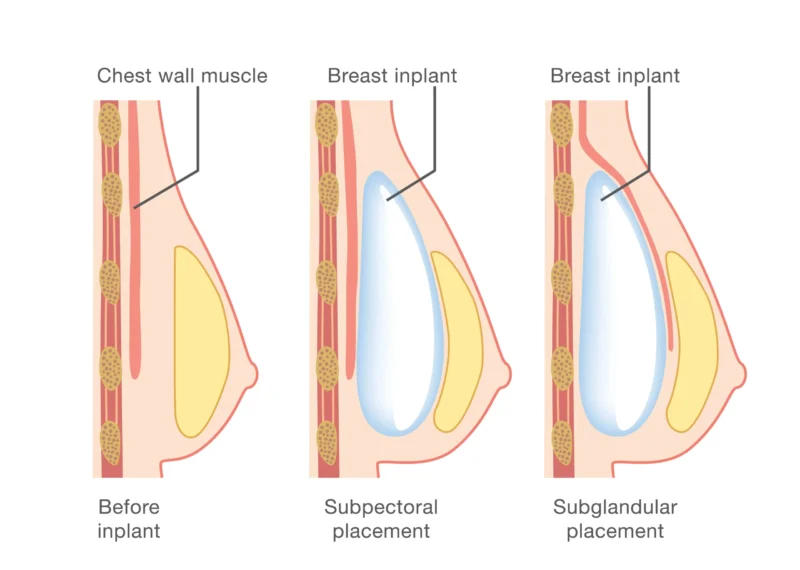
Choosing where to place a breast implant has major consequences in cosmetic breast surgery. A dual plane breast augmentation is a hybrid approach combining two traditional techniques: subglandular placement and subpectoral placement. By dividing the breast pocket into two tissue levels, it positions the upper portion of the implant under the chest muscle while allowing the lower portion to sit beneath the breast tissue.
The Dual Plane Categories (Type I, II & III)
Dual plane breast augmentation can be performed using three different techniques depending on the type of breast and the patient’s anatomy. Your plastic surgeon will decide which technique is best based on your existing soft tissue and lower-pole breast fold.
Type I Dual Plane
The least invasive surgery yielding the least dramatic results. It involves minimal release of the pectoralis muscle from the lower breast fold.
- Best Candidate: Women who require minor muscle release to allow the implant to settle smoothly into the lower pole.
Type II Dual Plane
Moderate muscle release, detaching the pectoralis muscle up to the lower border of the nipple-areola complex.
- Best Candidate: Patients with moderate breast tissue firmness, mild lower-pole tightness, or slightly constricted breast bases.
Type III Dual Plane
Extensive muscle release, detaching the muscle above the level of the nipple-areola complex.
- Best Candidate: Patients with tight lower poles, short nipple-to-inframammary fold distances, or mild breast ptosis (sagging).
Dual Plane vs. Subpectoral vs. Subglandular Placement
A dual plane breast augmentation has clear advantages compared with the two traditional techniques: subglandular placement (where the breast implant sits directly behind the breast tissue), and subpectoral placement (where the implant sits entirely under the pectoral muscle).
- Subglandular placement often leaves thin-skinned patients with visible implant borders or rippling.
- Placing the implant entirely under the muscle can distort the breast during chest contractions (known as animation deformity).
| Feature | Subglandular Placement | Subpectoral Placement | Dual Plane Placement |
| Upper Pole Coverage | Low (Risk of visible edges) | High (Fully covered) | High (Soft muscle coverage) |
| Lower Pole Flexibility | High (Natural movement) | Low (Restricted by muscle) | High (Unrestricted expansion) |
| Capsular Contracture Risk | Higher | Lower | Significantly Reduced |
| Animation Deformity | None | High | Minimizable / None |
| Ideal For Thin Patients | No | Moderate | Yes |
| Recovery | Faster | More Painful | Balanced & Manageable |
Preventing Rippling, Deformity & Unnatural Edges
One of the greatest fears patients express during our consultation is waking up with “ball-like” implants sitting unnaturally high on the chest or seeing visible waves along the side of the breasts.
- Eliminating Visible Rippling: The dual plane technique places the upper two-thirds of the implant under thepectoralis major muscle, providing a thick, cushion-like layer that masks implant borders.
- Preventing Animation Deformity: By selectively releasing the lower muscle attachments in a dual plane approach, the muscle glides smoothly over the upper pole without crushing or displacing the implant body.
- Smooth Upper Pole Transition: Rather than a stark, step-off border at the top of the breast, the dual plane method produces a gentle, soft-sloping transition from the collarbone down to the nipple.
Natural Contours with Ergonomic and Silicone Implants
The choice of breast implant works hand-in-hand with the dual plane technique. When performed by a seasoned plastic surgeon, this technique removes the signs of surgery, creating a silhouette that moves organically with your daily activities.
- Highly Cohesive Form-Stable Silicone Gel: Modern “gummy bear” implants maintain their shape while offering natural tissue elasticity.
- Ergonomic Silicone Implants: These progressive implants alter their shape according to gravity. When standing, the gel shifts toward the lower pole for a teardrop silhouette; when lying down, it distributes evenly like natural breast tissue.
Is Dual Plane Right for Your Body Type?
The success of a dual plane breast augmentation can only be estimated after a clinical assessment. Your plastic surgeon will analyze your chest wall dimensions, base width, and pinch test measurements to determine whether a Type I, Type II, or Type III dual plane is best for you.
You are likely an ideal candidate if you have:
- Thin Upper-Pole Tissue: Patients with less than 2 centimeters of soft tissue pinch on the upper chest pol
- Athletic or Low Body Fat Build: Women with low body fat who want volume increases not artificial-looking.
- Constricted Lower Poles or Tuberous Breasts: Breasts with tight lower folds or narrow bases.
- Desire for Active Lifestyle Mobility: Patients who engage in fitness, weight training, or high-impact sports.
How Dual Plane Helps Against Breast Ptosis (Sagging)
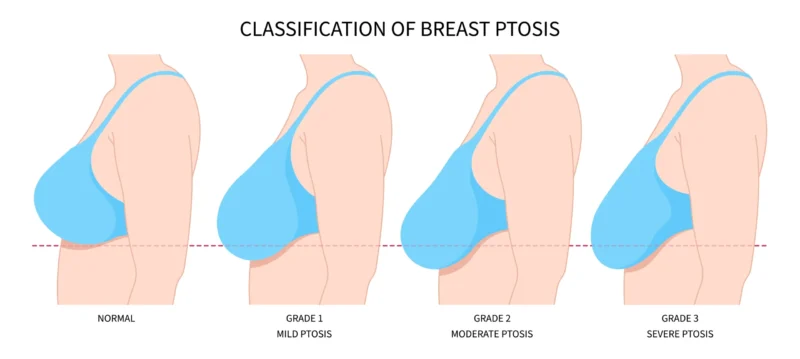
One of the most valuable benefits of the dual plane technique is its ability to correct mild breast sagging (grade 1 ptosis) without leaving the scars of a traditional breast lift (mastopexy).
- Redistributing Lower Tissue: In Type II and Type III dual plane, the breast gland unfolds and spreadssmoothly over the lower curve of the implant.
- Internal Lift Effect: Expanding the lower pole elevates the nipple position relative to the lower breast fold.
- Restoring Lost Upper Pole Volume: For women who experience volume loss post-pregnancy or after weight reduction, the dual plane pocket fills the upper pole while reshaping the lower breast.
When Dual Plane Is NOT Recommended
Despite its versatility, certain patients may require alternative approaches:
- Severe Breast Ptosis (Grade 2 or 3 Sagging): If the nipple sits significantly below the inframammary fold, a combined mastopexy is required to lift the hanging breast.
- Abundant Natural Tissue (> 3 cm Upper Pinch): Patients with abundant breast tissue may achieve flawless results with subglandular placement.
- Prior Pectoral Surgery or Chest Wall Trauma: Significant scarring or structural disruption to the pectoralis major muscle may compromise the stability of a dual plane pocket.
Cost of a Dual Plane Breast Augmentation
Dual plane breast augmentation typically costs $3,000 to $12,000 USD (standalone surgical fees). In primary medical tourism hubs like Turkey, all-inclusive packages average $3,200 to $4,500 USD, delivering 50% to 70% savings.
Cost Comparison (2026 Prices)
To help you budget effectively, here is how the primary destinations for dual plane breast augmentation compare across total costs and typical package inclusions:
| Country | Average Price Range (USD) | Package Inclusions |
| Turkey | $3,200 – $4,500 | Surgery, FDA/CE implants, 5-star hotel, VIP transfers, post-op garments, 24/7 care. |
| United States | $8,000 – $12,000+ | Surgery Only: Separate fees billed for surgeon, OR facility, anesthesia, and implants. |
| United Kingdom | $8,500 – $11,500 | Outpatient Standard: Surgery, basic follow-up, and implants. Hotel and transfers excluded. |
| Mexico | $3,500 – $5,500 | Hybrid: Surgery and facility included. Transfers/hotels usually booked independently. |
| Thailand | $3,500 – $5,000 | Medical Tourism: Hospital stay included. Resort accommodations optional extra. |
What Influences the Final Price?
When receiving a quote for dual plane breast augmentation, remember that pricing varies depending on clinical factors:
- Surgical Complexity: Releasing the pectoralis major muscle (Types II and III) requires higher surgical precision and technical skill.
- Implant Brand & Type: Premium cohesive silicone gel implants (e.g., Motiva Ergonomix, Mentor, or Natrelle) carry higher manufacturer costs but offer lifetime warranties and natural softness.
- Anesthesia & Facility Standard: Accredited surgical hospitals (JCI or Ministry of Health certified) with board-certified anesthesiologists yield higher costs.
- Post-Operative Aftercare: Comprehensive packages including post-surgical compression bras, scar therapy kits, and dedicated recovery check-ups.
Post-OP Recovery & Healing
Because dual plane breast augmentation involves stretching and releasing the lower portion of the pectoralis major muscle, the immediate post-operative phase involves deep chest tightness or muscle soreness similar to an intense chest workout.
To help you track your progress, here is how your body typically adapts during the first six weeks post-op:
Days 1 to 3 (Peak Soreness & Rest):
Expect noticeable swelling, tightness across the chest, and mild bruising.
- Care Protocol: Take prescribed muscle relaxants or pain medications on schedule. Rest on your back elevated at a 30 to 45-degree angle to minimize fluid retention.
Week 1 (Early Mobility):
Soreness gradually decreases, though movement in the arms and shoulders may feel slightly stiff.
- Care Protocol: Short, gentle walks around your home are encouraged to promote blood circulation and prevent deep vein thrombosis (DVT). Avoid lifting objects over 5–10 lbs (2–4 kg).
Weeks 2 to 3 (Return to Non-Strenuous Work):
Incisions begin to close, and skin tightness softens.
- Care Protocol: Most patients return to desk jobs or light daily routines. Continue wearing your post-surgical support bra continuously, avoiding underwire bras.
Weeks 4 to 6 (The “Drop and Fluff” Phase):
As the pectoralis muscle relaxes, the implants gradually settle into the lower breast pocket, revealing a softer, teardrop-shaped lower pole.
- Care Protocol: Your surgeon may clear you for light cardio and side-sleeping. Full upper-body weightlifting and high-impact sports should wait until full clearance (typically week 6).
Recovery Do’s and Don’ts
Adhering to post-op guidelines protects your implant pockets and prevents long-term complications:
| DO | DON’T |
| Wear a surgical support bra 24/7. | Do NOT wear underwire bras or push-up bras for 6 to 8 weeks. |
| Sleep flat on your back with upper body elevated on 2–3 pillows. | Do NOT sleep on your stomach or side until cleared by your surgeon. |
| Take frequent, short walks to maintain blood flow. | Do NOT raise your elbows above your shoulders or lift heavy weights. |
| Keep incision sites clean and dry according to post-op orders. | Do NOT submerge incisions in baths, pools, or hot tubs for 4 weeks. |
When to Contact Your Surgeon
While mild discomfort, swelling, and asymmetry are normal during early healing, you should contact your surgeonimmediately if you experience any of the following warning signs:
- Sudden Swelling in One Breast: Rapid swelling or tightness in one breast compared to the other (a sign of potential hematoma).
- Persistent High Fever: A temperature over 101°F (38.3°C) accompanied by severe redness or warmth around the incision (possible infection).
- Shortness of Breath: Sudden chest pain or difficulty breathing.
- Fluid Leakage: Heavy, foul-smelling drainage coming from the surgical incision site.
How Dual Plane Ages Over 10 to 20 Years
Breast tissue naturally changes over time due to aging, gravity, weight fluctuations, and pregnancy. Dual plane breast augmentation offers better long-term stability compared to older techniques:
- Reduced Risk of Capsular Contracture: Clinical studies show that submuscular tissue significantly decreases the risk of capsule hardening (capsular contracture).
- Sustained Muscle Support: The upper muscle acts as an internal sling, supporting the weight of the implant and reducing long-term sagging (ptosis).
- Anatomical Aging: As your natural tissue matures, the dual plane dual-layer pocket maintains a blend between your breast and the implant, preventing the “double-bubble” deformity.
FAQs
Is Dual Plane Breast Augmentation More Painful Than Subglandular Placement?
Yes, during the first 3 to 5 days. The lower pectoralis major muscle is released, which means initial recovery involves more soreness, resembling an intense chest workout. This is easily managed with muscle relaxants and is greatly reduced within a week.
Will Dual Plane Implants Affect My Ability to Breastfeed?
No, provided standard inframammary incisions are used. Placing the upper implant behind the muscle leaves milk ducts and glandular tissue intact. Choosing an inframammary fold (under-breast crease) incision ensures full anatomical preservation for future lactation.
How Long Does Full Recovery Take?
Light daily tasks resume in 1 week; full workouts in 6 weeks. Most patients return to desk jobs within 7 to 10 days. Light cardio is permitted at week 4, while heavy lifting and intense upper-body exercises require 6 full weeks for complete muscle healing.
What Is the “Drop and Fluff” Phase?
It is the natural settling of implants into their final position over 3 to 6 months. Initially, tight chest muscles hold implants high. As the muscle relaxes and lower skin expands, implants “drop” into the pocket and “fluff” into a soft, natural teardrop shape.
How Does Dual Plane Placement Impact Future Mammograms?
It improves screening accuracy compared to subglandular placement. Because the implant sits behind the muscle, radiologists use standard Eklund displacement views to push the implant back, isolating natural breast tissue for clear, unobstructed cancer screening.
Can Dual Plane Augmentation Correct Sagging Breasts Without a Lift?
Only for mild sagging (Grade 1 ptosis). Type II or III dual plane pockets expand lower tissue, providing a mild internal lift. Moderate-to-severe sagging (Grade 2 or 3) requires a combined breast lift (mastopexy) to remove excess skin.
What Is the Risk of Capsular Contracture with Dual Plane Implants?
Significantly lower than subglandular placement. Partial submuscular coverage provides a biological barrier and reduces bacterial contamination around the implant shell, dropping long-term capsular contracture rates down to 2–4%.
How Long Do Dual Plane Implants Last?
Modern cohesive silicone implants last 10 to 20+ years. Unless a rupture or capsular contracture occurs, implants do not require routine replacement on a fixed timeline. However, natural aging or body changes may prompt future cosmetic adjustments.