


Breast Reduction Cost: 2026 Pricing, Financing & Insurance Guide
Last Update:24 June 2026

Patients seeking relief from the physical and emotional burdens of oversized breasts often have to pay an exorbitant breast reduction cost. The good news is the average cost of breast reduction varies significantly and can be very affordable. Whether through financing options, insurance, or medical tourism, many patients can often undergo surgery for as little as $800 to $3,500. Let’s look into this in detail.
| Country / Region | Average Price Range (USD) | What is Typically Included? |
| United States | $6,000 – $12,000 | Surgeon fee only (Facility & anesthesia extra) |
| United Kingdom | £6,500 – £9,500 | Private hospital fees, consultations, surgery |
| Doku Clinic (Turkey) | $3,500 – $5,500 | All-inclusive: Surgery, luxury hotel, VIP transfers |
How Does Breast Reduction Surgery Work?
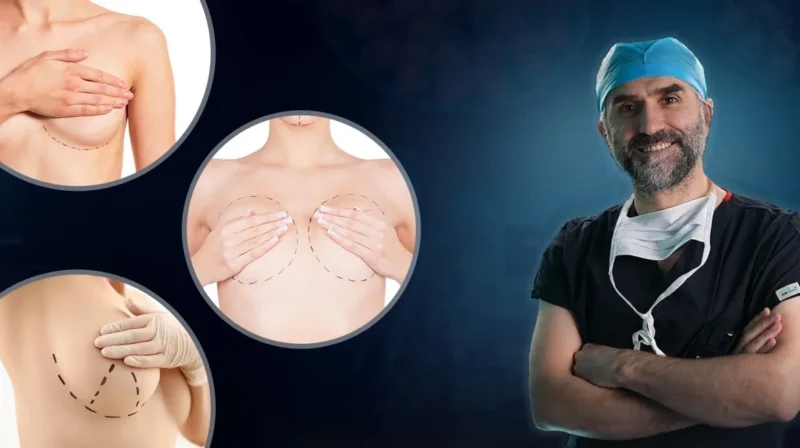
Breast reduction surgery —reduction mammoplasty— is a reconstructive and aesthetic procedure. The core objective is to alter three key components of breast anatomy: excess tissue, adipose fat deposits, and overstretched skin.
At Doku Clinic, we execute this procedure using a multi-phase safety protoco:
- Phase 1: Pre-Operative Tests
- Phase 2: Anesthesia
- Phase 3: Excision and Tissue Resection
- Phase 4: Repositioning and Contouring
- Phase 5: Incision Closure and Internal Support
Advanced Surgical Techniques
Industry experts like Dr. Serkan Aygin and Dr. Engin Öcal utilize specific incision patterns to achieve optimal structural symmetry while minimizing long-term scarring.
- The Anchor Technique (Inverted-T): involving three incision cuts: around the areola, vertically down, and horizontally along the inframammary fold.
- The Lollipop Technique (Vertical Incision): A modern approach requiring only two cuts: around the areola and straight down to the breast crease. , offering excellent upper-pole fullness with less scarring.
- The Pedicle Approach vs. Free Nipple Grafts: In standard pedicle reductions, the nipple remains connected to its original underlying nerve and blood supply to preserve long-term sensation.
Professional Fees and Medical Costs
Let’s divide the final price of breast reduction into components to fully understand it. The biggest part of the bill is the surgeon’s professional fee, which accounts for over 70% of the cost.
- Surgeon’s Fee: Reflects the clinical reputation, board certifications, and specialist expertise of the medical professional performing the operation.
- Anesthesia Services: Covers the vital administration of general anesthesia by a certified anesthesiologist, alongside continuous vital sign monitoring throughout the procedure.
- Operating Room & Facility Charges: Encompasses the utilization of advanced medical tech, sterile surgical environments, specialized disposable equipment, and immediate post-anesthesia nursing care.
Hidden Expenses in Reduction Mammoplasty
Outpatient procedures involve several pre-operative and post-operative necessities that accumulate quickly if billed individually. If you don’t budget for these, you can potentially find yourself in financial strain during recovery. Reputable centers mitigate this risk by bundling these costs from the very beginning.
- Pre-Operative Diagnostics: Mandatory evaluations including blood tests, electrocardiograms (ECG), and diagnostic mammograms.
- Post-Surgical Support Garments: Specialized medical-grade compression bras for controlling swelling, supporting tissue, and optimizing scars.
- Prescription Medications: Vital pharmaceuticals including antibiotics to prevent infection and analgesics for pain management.
How Much is Breast Reduction Surgery with Insurance?
Securing coverage for a breast reduction cost with insurance requires proving documentation of strict medical necessity rather than cosmetic desire. This is no easy task in most cases.
- Symptom Documentation: Chronic back, neck, and shoulder pain, along with severe skin irritation under the breast fold, must be formally diagnosed.
- The Schnur Scale: Insurance adjusters utilize this mathematical chart to cross-reference your total body surface area with the specific volume of tissue to be removed.
- Conservative Therapy: Providers typically require proof of failed non-surgical treatments, such as physical therapy or specialized orthopedic support bras.
Out-of-Pocket Breast Reduction Cost with Insurance
Even with an approved medical claim, a how much is breast reduction surgery with insurance query reveals significant out-of-pocket costs.
- Deductibles: Patients must pay their full annual out-of-pocket deductible before insurance coverage kicks in.
- Co-Insurance & Co-Pays: You are typically responsible for 10% to 30% of the remaining hospital fees and specialized anesthesia bills.
- The Self-Pay Alternative: Due to complex insurance barriers, many patients choose all-inclusive packages abroad to save time and money.
Financing Options for Breast Reduction Surgery
When a procedure is purely elective or when insurance coverage falls short, financing plans allow patients to distribute the average cost of breast reduction into monthly commitments.
- Specialized Medical Loans: Third-party lenders provide specialized healthcare loans featuring flexible repayment terms spanning from 12 to 60 months.
- Medical Tourism Financing Networks: International patient platforms, including cross-border facilitators like Doku Clinic, offer direct institutional payment plans for international travelers.
- Low-Interest Personal Lines of Credit: Utilizing traditional banking institutions often secures a fixed-rate personal loan with significantly lower APR metrics than a standard credit card.
Comparison of Financing Options
| Financing Option | Target Audience | Key Feature | Financial Consideration |
| 0% APR Promotional Cards | Patients with excellent credit | 0% Interest for initial promotional windows (typically 6–18 months) | High standard APR applies immediately if the balance is not cleared in full. |
| Specialized Medical Lenders | Self-paying domestic patients | High approval rates with dedicated soft credit inquiries | Interest rates scale between 4.99% and 16.9% APR based on tier qualification. |
| International Installment Plans | Global medical travelers | Multi-country loan integration reaching up to £50,000 / $100,000limits | Requires verified steady employment; short-term options may carry fixed processing fees. |
Why Doku Clinic Offers a Breast Reduction Cost Affordable by All
Choosing Doku Clinic in Istanbul balances financial prudence with world-class standards. The facility operates under rigid international medical protocols, providing elite outcomes.
- Medical Authority: Clinical frameworks align with the rigorous, data-driven excellence established by industry pioneers like Serkan Aygin and Dr. Engin Öcal.
- Eliminating Hidden Fees: Fixed pricing structures ensure international patients avoid unexpected post-operative bills.
Factors Influencing Breast Reduction and Lift Cost
After seeing such great disparity in the breast reduction cost, it is only natural to wonder how prices can differ so greatly. Let’s take a look at the main determinants of the price and how a cheaper surgery can be found for the same quality.
Surgical Techniques and Medical Complexity
Every patient requires a highly individualized clinical approach, which alters the breast reduction and lift cost. The overall price scales alongside the complexity of the internal tissue rearrangement.
- Incision Patterns: Standard approaches include the Wise-Pattern (anchor-shaped) or the vertical (lollipop) incision. More complex patterns require extended operating room times, increasing baseline costs.
- Tissue Resection Volume: Removing larger volumes of dense glandular tissue requires precise surgical dissection to protect surrounding vascular networks, directly impacting the final fee.
- Combined Lifting Procedures: Correcting severe breast sagging (ptosis) alongside volume reduction requires specialized reshaping techniques, which naturally adjusts the financial investment.
Clinical Expertise and Board-Certified Authority
Entrusting your care to a premier surgical team ensures both aesthetic excellence and patient safety. Advanced institutions justify their pricing frameworks by maintaining elite medical standards.
- Surgical Authority: Performing sophisticated reconstructive procedures requires the advanced training demonstrated by international experts like Serkan Aygin and Dr. Engin Öcal.
- Clinical Setting Standards: Elite facilities utilize ultra-modern surgical theaters and specialized post-anesthesia units to minimize the risk of complications.
- Vascular Safety Focus: Experienced surgeons utilize specialized techniques to preserve optimal nerve sensation and blood supply to the nipple-areola complex.
Is Breast Reduction in Turkey Safe?
Patient safety remains the baseline for anyone assessing medical travel for a reconstructive procedure. Evaluating a boob reduction cost in Turkey reveals that top-tier safety is achieved through rigid regulatory oversight rather than cutting corners.
The Turkish Ministry of Health enforces strict, continuous compliance frameworks that mirror the European medical directives:
- ISO Certification Mastery: Elite centers operate with certified excellence, maintaining rigorous protocols like ISO 9001:2015 for quality management systems.
- Sterile Environment Control: Surgical theaters utilize advanced laminar airflow systems and HEPA filtration to maintain total environmental sterility during procedures.
- Medication Safety Standards: All pharmaceuticals, anesthetics, and clinical supplies are governed by strict traceability tracking networks matching Western hospital tiers.
- Specialized Surgical Training: Dual-trained reconstructive specialists hold active, prestigious memberships in bodies like ISAPS (International Society of Aesthetic Plastic Surgery).
- Clinical Authority Drivers: Institutional protocols align with the high-standard, data-driven medical methodologies championed by globally respected pioneers like Serkan Aygin and Dr. Engin Öcal.
- Vascular Flap Safety: High clinical volume leads to absolute mastery over advanced pedicle techniques, ensuring blood supply and nerve preservation to the nipple-areola complex.
FAQs
How much is breast reduction surgery on average?
The total investment varies by region. In the US, the average surgeon fee sits around $7,800, but total out-of-pocket costs regularly exceed $12,000 when factoring in independent facility and anesthesia bills. All-inclusive packages in global medical hubs like Turkey typically range between $3,500 and $5,500.
What are the main symptoms that justify surgery?
Insurance companies routinely approve coverage if a board-certified plastic surgeon documents chronic neck, back, and shoulder pain, deep shoulder grooving from bra straps, or recurrent skin infections (intertrigo) beneath the breast fold that fail to resolve with conservative therapies.
How long does the recovery process take before returning to work?
Most patients return to light desk work within 1 to 2 weeks post-surgery. Strenuous exercise, heavy lifting, and overhead stretching must be avoided for 4 to 6 weeks to prevent wound healing delays and ensure optimal scar maturation.
Is it possible to combine a breast reduction with a lift?
Yes. Most reduction procedures inherently include a breast lift. The surgeon removes excess fat, glandular tissue, and stretched skin, then transposes the nipple-areola complex to a higher, more youthful position on the chest wall.
Why do pricing models differ so much between the US and Turkey?
The price difference is driven by lower operational overhead, lower cost of living, and favorable currency exchange rates in Turkey. Highly regarded medical institutions like Doku Clinic offer competitive, all-inclusive pricing without compromising strict international clinical standards.
Will a breast reduction affect my ability to breastfeed?
There is a potential risk. Techniques that keep the nipple attached to its original underlying tissue stalk (pedicle) help preserve milk ducts and nerve pathways. However, patients planning future pregnancies should discuss these structural implications with their surgeon during consultation.