


Submuscular Silicone Implants: Complete Guide, Costs, & Placement Comparisons
Publish Date:3 August 2026
Written by the Editorial Team of Doku Clinic. Reviewed by Dr. Engin Öcal | Plastic, Reconstructive & Aesthetic Surgeon
Implant placement for breast augmentation is a decision that dictates your outcome, recovery, and long-term safety for the next 10 to 15 years. Placing silicone implants under the chest muscle (submuscular implant placement) has the benefit of natural movement and reduced contracture risks, but it comes with recovery challenges that require clear expectations.
Key Takeaways from this article:
- Submuscular placement reduces capsular contracture risks to under 2–3%.
- Ideal for patients with less than 2 cm of breast tissue.
- Recovery spans 10–14 days, with final results taking 3 to 6 months.
- Verify ISAPS and EBOPRAS board certifications and international insurance coverage before proceeding.
What Is Submuscular Placement?
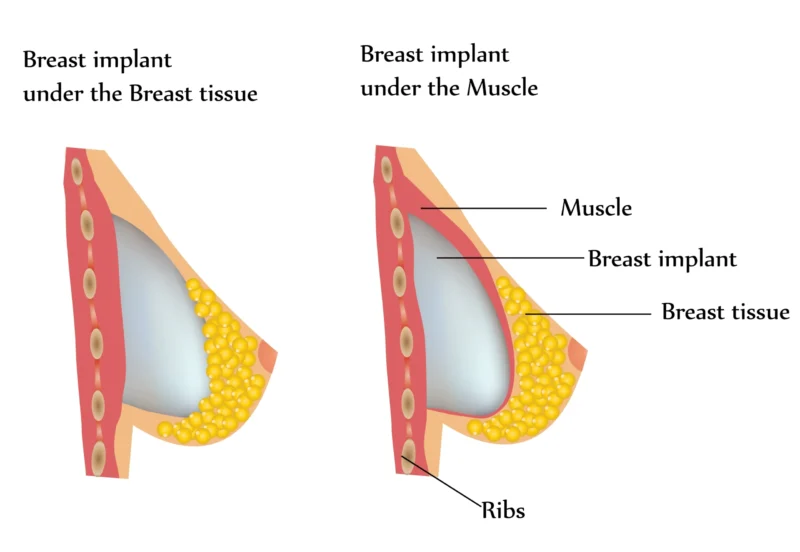
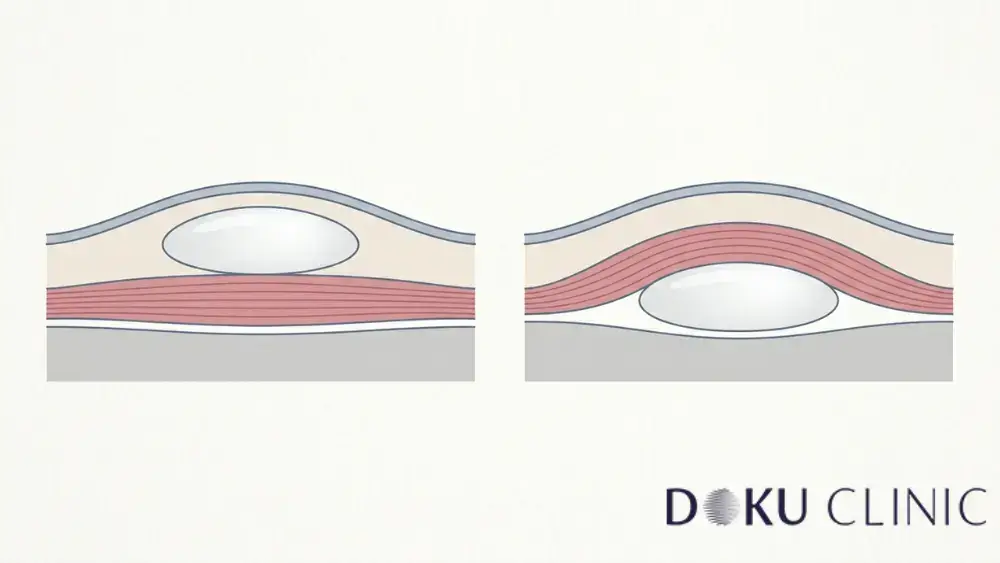
When placing submuscular silicone implants, the surgeon elevates the pectoralis major muscle from the chest wall to construct a pocket. Instead of resting directly behind your natural breast tissue (glandular layer), the top half to two-thirds of the silicone breast implant rest behind such muscle. It is the preferred breast augmentation technique for thin-tissue patients.
How Submuscular Differs from Subglandular Placement
The main distinction between these 2 breast surgery approaches centers on implant depth relative to the chest wall muscle:
- Subglandular Placement: The implant is inserted over the muscle and behind the breast gland.
- Submuscular Placement: The implant rests beneath the muscle wall. It provides lower complication rates over a 10-to-20-year horizon.
Risk of Capsular Contracture and Rippling
Capsular contracture takes place when the body’s immune system builds a tight scar tissue capsule around the breast implant. Submuscular breast implants maintain a low contracture rate of 1.83% – 2.0%, compared to 6.85% in subglandular procedures. Submuscular coverage also reduces wave-like skin wrinkles (rippling) because the muscle acts as a thick barrier over the cohesive silicone gel.
| Subglandular Placement | Submuscular / Dual-Plane | |
| Upper Pole Transition | Abrupt / Defined | Gradual / Natural Slope |
| Capsular Contracture Risk | High (~6.85%) | Low (~1.83%) |
| Rippling Visibility | Higher in thin patients | Minimal |
| Pain Level | Low to Moderate | Moderate to High (Days 1–5) |
| Mammogram Clearance | Requires special views | Easier visualization |
| Animation Distortion | None | Mild movement during flex |
Who Is the Ideal Candidate?
Submuscular placement is an anatomical solution that requires close surgical assessment:
- Pinch Test Under 2 cm: If the skin and tissue pinch above your nipple measures less than 2 cm, subglandular implants carry a high risk of visible implant edges and surface rippling.
- Athletic Build: Patients with low body fat percentages lack the subcutaneous fat required to hide subglandular implant borders.
- History of Capsular Contracture: Patients seeking revision surgery benefit from submuscular placement due to lower scar tissue cases.
- Active Screening: Women who require routine mammograms benefit because muscle separation allows clearer radiological imaging.
The Surgery Process & Pocket Creation

Dr. Engin Öcal
When surgeons speak of “submuscular placement” today, they are almost always referring to a dual-plane technique rather than a total submuscular lock.
- Total Submuscular Placement: The implant is entirely covered by muscle tissue. While safe, it can constrain the implant, leading to a flatter lower pole and visible upward movement.
- Dual-Plane Placement (The Modern Standard): The upper portion of the silicone breast implant sits beneath the pectoralis major muscle, while the lower portion sits directly behind the natural breast gland.
Anaesthesia, Incisions, and Pocket Elevation
A submuscular procedure is a staged operation performed under general anaesthesia, taking between 60 and 90 minutes.
| Phase | Description |
| Step 1: Anaesthesia & Markings | Pre-op mapping over the patient’s body |
| Step 2: Precision Incision | Inframammary, Periareolar, or Transaxillary |
| Step 3: Muscle Elevation | Pectoralis major lifted under direct vision |
| Step 4: No-Touch Insertion | Keller Funnel placement to prevent bacteria |
| Step 5: Hemostasis & Closure | Layered absorbable sutures & pressure dressing |
Incision
- Inframammary Fold (IMF): The most popular and precise approach. The surgeon enters through a 3–4 cm incision hidden in the crease under the breast, providing direct visual access to the muscle base.
- Periareolar: Entered around the lower half of the nipple border. Ideal when mild mastopexy (breast lift) or glandular reshaping is required simultaneously.
- Transaxillary: Entered through the armpit. Leaves zero scars on the breast, though pocket creation under the muscle requires endoscopic camera guidance.
Pocket Creation and Implant Insertion
To ensure long-term safety, modern protocols prioritize a no-touch technique:
- The pectoralis muscle is elevated off the rib cage using electrocautery to prevent internal bleeding.
- The pocket is irrigated with a triple-antibiotic solution.
- The submuscular silicone implant is loaded into a sterile Keller Funnel—a specialized sleeve that glides the implant under the muscle in seconds without touching the patient’s skin, reducing surgical infection rates to less than 5%.
Silicone Gel Types
The success of a submuscular implant relies heavily on the correct silicone gel to match your muscle density. Placing a weak or watery implant under a strong muscle can flatten the gel, distorting your natural shape.
- Gummy Bear (Form-Stable) Silicone: Highly cohesive gel that retains its shape even when under constant pressure from the pectoralis muscle. Highly recommended for submuscular pockets.
- Standard Cohesive Silicone Gel: Offers a softer, more fluid feel. It moves dynamically with body motion but requires adequate natural tissue to prevent upper pole rippling.
- Profile Selection (Moderate vs. High Profile): Because submuscular placement flattens the upper portion of the implant slightly, choosing a high-profile or extra-high-profile implant helps maintain forward projection without sacrificing upper slope naturalness.
Post-OP Recovery: What to Expect Week by Week

Doku Clinic
Recovering from submuscular implant placement requires patience. The pectoralis muscle is lifted and stretched, which means your body undergoes a profound anatomical manipulation. Understanding the stages of muscle relaxation prevents unnecessary anxiety during the healing window.
| Time | Recovery Phase | Expectations |
| Days 1–7 | Acute Phase | High swelling, chest tightness, back sleeping only |
| Weeks 2–4 | Mobility Phase | Return to work, muscle spasms diminish |
| Weeks 6–8 | Clearance Phase | Exercise resumed, compression band removed |
| Months 3–6 | Final Result Phase | “Drop and Fluff” completes, soft lower pole fullness |
Days 1 to 7: Managing Tightness, Pain, and Surgical Drains
During the first week, patients experience intense muscular tightness across the chest wall. Unlike subglandular placement, submuscular implants trigger muscle contractions as the pectoralis fights against the elevated pocket.
- Expect a feeling of deep pressure or heavy weight on the chest, comparable to an intense upper-body workout combined with tight muscle spasms.
- Oral muscle relaxants and prescribed analgesics are utilized to keep discomfort low. Pain drops by 50% to 70% after Day 4.
- Patients must sleep strictly on their back at a 30-to-45-degree incline using a wedge pillow to minimize localized fluid build-up (edema) and prevent implant displacement.
- If surgical drains are placed, they maintain low pressure to clear seroma fluid and are typically removed in clinic between Days 3 and 5.
Weeks 2 to 4: Muscle Relaxation, Daily Activity, and Compression Garments
By the second week, sharp muscular soreness gives way to mild stiffness. The pectoralis muscle begins to adapt to its new stretch.
- A medical-grade post-operative bra combined with an upper stabilization strap (compression band) must be worn 24/7.
- Desk workers usually return to office duties by Day 10 to Day 14. Arm movements above shoulder height, heavy pushing, and lifting objects over 5 kg (11 lbs) remain strictly prohibited.
Months 3 to 6: The “Drop and Fluff” Phase and Final Results
The visual transformation after submuscular placement occurs in two phases: Dropping and Fluffing.
- The Drop (Months 1 to 3): As the muscle relaxes over 8 to 12 weeks, gravity gently moves the implant down into the lower pole pocket.
- The Fluff (Months 3 to 6): As post-op swelling dissipates completely and skin tissue adapts to the new volume, the lower pole of the breast expands, rounds out, and softens.
Recovery at a Glance
| Recovery Timeline | Mobility Status | Pain Level (1-10) | Surgical Support Required |
| Days 1–3 | Restricted arm movement; walking allowed | 6 – 8(Managed) | Surgical Bra + Compression Strap + Drains (if placed) |
| Days 4–7 | Light household walking; no arm extension | 3 – 5 | Surgical Bra + Upper Compression Strap |
| Weeks 2–4 | Return to desk work; light driving allowed | 1 – 3 | Surgical Bra 24/7 (No underwires) |
| Weeks 6–8 | Full cardio & leg workouts cleared | 0 – 1 | Supportive sports bra; underwire transition allowed |
| Months 3–6 | Unrestricted weightlifting & chest exercises | 0 | Normal lingerie shopping cleared |
What Determines the Cost of Submuscular Silicone Implants?
Submuscular silicone implant pricing varies dramatically based on region, medical insurance, healthcare models, surgeon and more.
| Region / Country | Average Total Cost (USD / EUR / GBP) | Inclusions & Features | Typical Waiting Time |
| United States | $10,000 – $15,000 | Surgical fee only; facility, implants, and anaesthesia billed separately. | 2 – 4 Months |
| United Kingdom | £6,500 – £9,500 ($8,500–$12,000) | Basic surgical package; aftercare garments often billed extra. | 3 – 6 Months |
| Western Europe (Germany/France) | €7,500 – €11,000 ($8,000–$12,000) | Clinic and surgeon fees; limited post-op support packages. | 2 – 3 Months |
| Doku Clinic (Istanbul, Turkey) | $3,200 – $5,200 (€3,000–€4,800) | All-Inclusive (Surgery, Implants, Hospital, Hotel, VIP Transfers, Aftercare). | Immediate / Direct Scheduling |
Primary cost drivers include:
- Implant Brand & Cohesivity: Premium, FDA-approved, or CE-marked gel implants (such as Motiva Ergonomix, Mentor MemoryShape, or Polytech) carry higher manufacturer costs but offer lifetime anti-rupture warranties.
- Surgical Skill & Technique: High-volume plastic surgeons who specialize in dual-plane submuscular pockets ask for higher fees.
- Hospital & Anaesthesia Standards: Performing surgery in a fully equipped, JCI-accredited general hospital with a full intensive care unit (ICU) ensures safety but increases facility fees.
All-Inclusive Medical Packages
A transparent, comprehensive medical package must specify every detail prior to booking:
- Surgical & Device Fees: High-grade silicone implants (Mentor, Motiva, or Polytech) with official serial numbers and warranty cards.
- Hospital & Clinical Overhead: Overnight stay in a private room with 24/7 medical supervision and pre-operative lab work.
- Medications & Recovery Gear: Medical-grade post-operative compression garments, surgical bras, drain management kits, and full prescription medications (antibiotics, pain management, anti-swelling agents).
- Medical Travel Support (If Traveling): Private VIP ground transfers, 5-star hotel accommodation for the recovery phase, and personal language translation services throughout hospital stays.
Safety Standards, Licensing & Red Flags
Selecting a clinic and surgeon for submuscular silicone implant surgery requires strict due diligence. Patient safety hinges on clinical accreditation, surgical board credentials, and international insurance.
Essential Surgeon Certifications (ISAPS, EBOPRAS, & National Boards)
A qualified aesthetic plastic surgeon must hold verifiable Board Registration in plastic, reconstructive, and aesthetic surgery. Never rely on general medical licenses or cosmetic society titles.
- ISAPS (International Society of Aesthetic Plastic Surgery): ISAPS membership guarantees that the surgeon is board-certified in their home country, has extensive specialist training, and adheres to strict patient safety protocols.
- EBOPRAS (European Board of Plastic Reconstructive and Aesthetic Surgery): Demonstrates that the specialist has passed standardized European examination boards testing comprehensive plastic and reconstructive expertise.
Facility Accreditation Standards (ISO, JCI, & ICU Capabilities)
Submuscular placement must always be performed under general anaesthesia in a sterile operating theatre. Operating in unaccredited private day-clinics without full resuscitation equipment represents an unacceptable risk.
- JCI (Joint Commission International): Represents the highest standard of international hospital safety, ensuring strict infection control, emergency protocols, and continuous medical auditing.
- ISO Certification (ISO 9001 / ISO 13485): Verifies that clinical workflows, instrument sterilization, and patient management follow strict quality management systems.
- On-Site ICU (Intensive Care Unit): The facility must feature a fully staffed ICU on-site to handle sudden adverse events or complex anaesthetic reactions immediately.
Essential Pre-Flight & Pre-Op Safety Checklist
Before committing to any surgical booking for submuscular silicone implants, ensure the following four checkpoints are checked:
- Direct Physician Communication: Have you had a direct medical consultation with your surgeon to review pocket placement (Dual-Plane vs. Subglandular)?
- Official Implant Verification: Are your silicone gel implants guaranteed to be CE-marked or FDA-approved (e.g., Mentor, Motiva) with lifetime rupture protection?
- Complication Insurance: Does your medical package include mandatory international surgical complication insurance covering unexpected hospital stays or revisions?
- Verified Credentials: Have you independently checked your operating surgeon’s board numbers on official society registries (e.g., ISAPS registry)?
FAQs
How painful is submuscular breast implant recovery compared to subglandular?
Submuscular placement causes more initial soreness because the chest muscle is stretched. Tightness peaks during the first 3 to 5 days but drops significantly by week two, with pain easily managed using prescribed analgesics and muscle relaxants.
Will submuscular placement affect my ability to exercise or lift weights?
You can return to full fitness, including chest exercises, after 6 to 8 weeks. While heavy chest contractions may cause slight temporary implant movement (animation), submuscular placement does not impair long-term muscle function or athletic capability.
How long do submuscular silicone implants last?
Modern cohesive silicone implants last 10 to 15 years or longer. They do not require routine replacement unless a rupture or capsular contracture occurs. Premium brands come with lifetime manufacturer replacement warranties.
What is the “drop and fluff” process, and how long does it take?
“Drop and fluff” describes the transition as the pectoralis muscle relaxes, allowing the implant to settle into the lower breast fold. The upper pole softens and rounds out naturally, taking between 3 to 6 months to complete.
Can submuscular implants interfere with mammograms or breast cancer screening?
Submuscular placement is superior for breast imaging because the implant sits behind the chest muscle. Radiologists can easily push the implant back, allowing clearer, unobstructed visualization of native breast tissue during routine mammograms.
Can I breastfeed with submuscular silicone implants?
Yes. Submuscular placement preserves the mammary glands and milk ducts because the implant sits entirely behind the breast tissue and muscle layer. Surgical incisions like the inframammary fold further minimize any risk to lactation pathways.
What is animation distortion, and should I be worried about it?
Animation distortion is mild, temporary flattening or movement of the implant when flexing the pectoralis muscle. It is completely normal for submuscular placement, harmless, and rarely noticeable in daily activities or moderate exercise.
How do I know if I have enough tissue for subglandular placement instead?
Surgeons use a “pinch test” on the upper breast pole. If your skin and tissue measure less than 2 centimeters, submuscular placement is necessary to camouflage the implant edges and prevent visible surface rippling.