


Facelift Turkey for Americans: The Complete 2026 USA Patient Guide
Last Update:23 March 2026
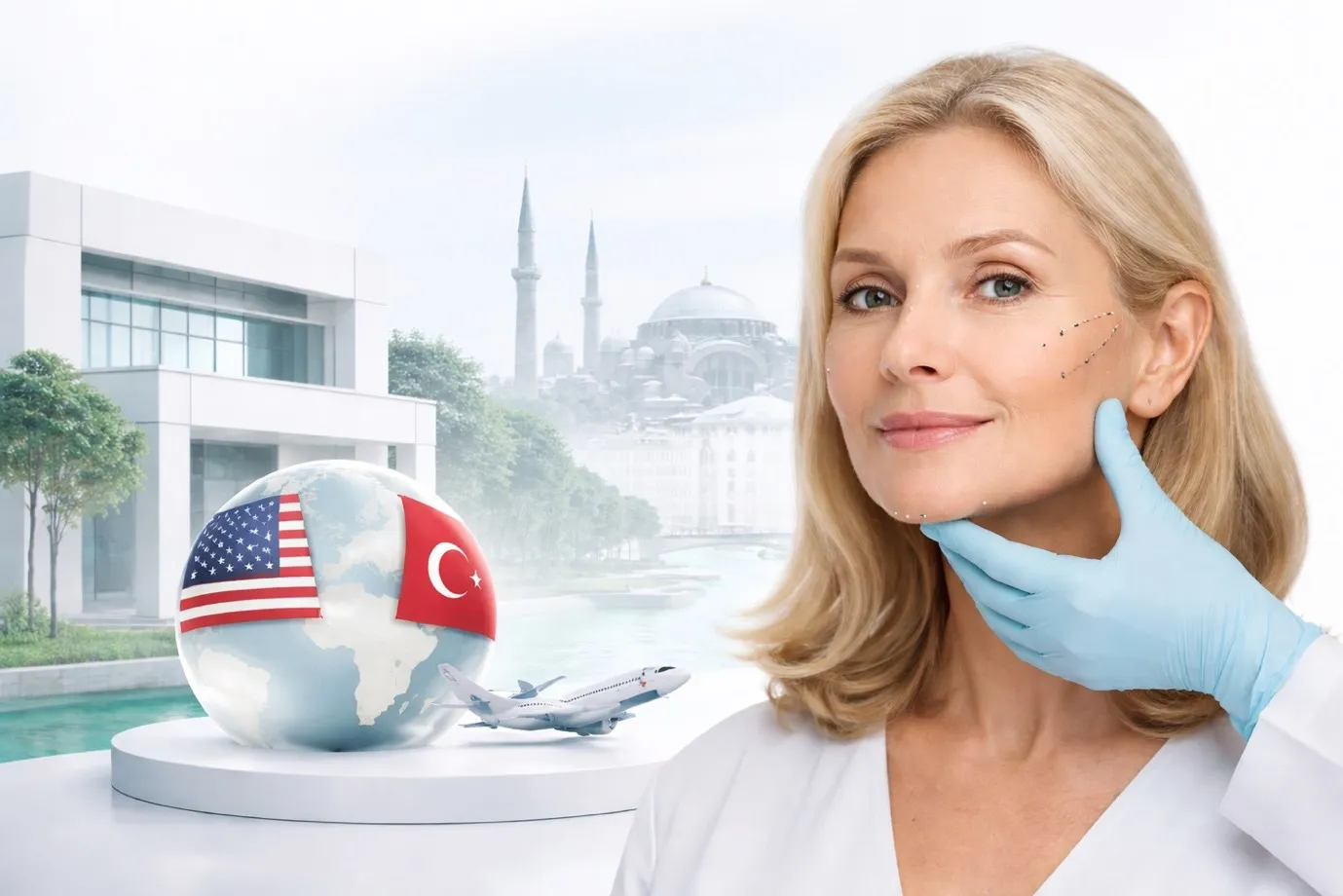
For many American patients, the decision to seek a facelift in Turkey is driven by the desire for high-definition results and access to renowned surgeons who specialize in the latest deep-plane facelift and SMAS techniques. This guide provides a roadmap for navigating the journey from the USA to Turkey, ensuring a safe and transformative experience.
Quick Insights: Facelift Turkey for US Patients
- Average Cost Savings:The facelift Turkey USA price gap is substantial; patients typically pay $5,500–$8,500 in Istanbul vs. $20,000–$45,000 in major US cities like New York or Miami.
- All-Inclusive Value:Premium Turkish clinics provide “door-to-door” packages including the surgery, hospital stay, luxury hotel, private transfers, and all post-op medications.
- Global Standards:Top-tier Istanbul centers maintain international safety protocols (JCI, ISAPS), ensuring results that rival or exceed US board-certified standards.
- Total Trip Budget:Even accounting for long-haul flights from the USA and recovery time, the total investment rarely exceeds $10,000, remaining thousands of dollars below the cost of a US-based surgery alone.
Why Americans Travel to Turkey for Facelift Surgery
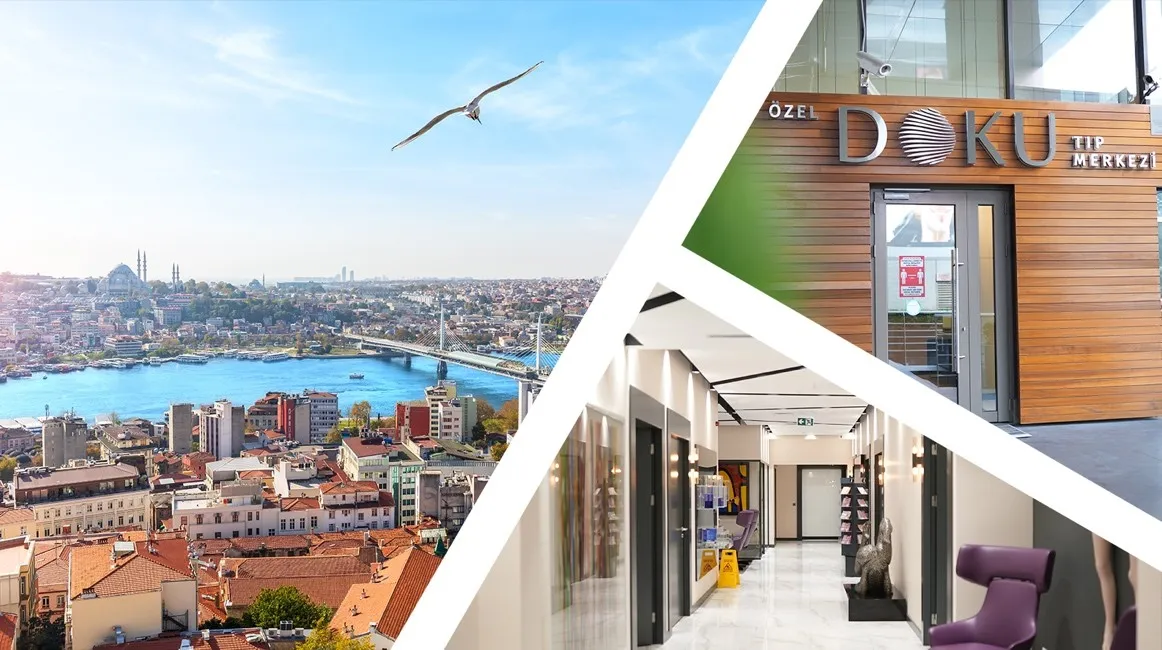
For American patients considering facial rejuvenation, the facelift Turkey cost is a significant factor in the decision to travel abroad. With high-end deep-plane or SMAS procedures in the United States often ranging from $15,000 to $50,000, Istanbul has become the primary destination for those seeking affordable, elite surgery. Complete facelift Turkey packages typically range from $4,500 to $9,000, even when performed by world-renowned surgeons in JCI-accredited facilities.
Beyond the financial aspect, the volume of procedures performed by Turkish plastic surgeons often exceeds that of their American counterparts. This high frequency leads to a refined level of surgical expertise and the adoption of cutting-edge technology that is often implemented faster than in US hospitals.
Significant Cost Savings vs USA
The most striking difference for Americans is the price transparency. In the United States, a comprehensive facelift can range from $15,000 to $50,000, often excluding anesthesia, facility fees, and medications. In contrast, facelift Turkey packages are typically “all-inclusive,” covering the surgery, luxury accommodation, and VIP transfers. Overall, American patients save between 60% and 80% on their total expenses.
No Insurance Restrictions and Transparent Pricing
Cosmetic procedures are rarely covered by health insurance, leaving US patients to navigate billing cycles and hidden costs. Turkish clinics specialize in fixed-price packages, providing a clear financial roadmap.
Advanced Surgical Techniques in Istanbul’s Top Clinics

Turkish plastic surgeons are early adopters of minimally invasive techniques such as the Endoscopic Facelift and the Vertical Vector Facelift. By utilizing advanced 3D imaging and specialized instrumentation, Americans benefit from natural-looking results with significantly reduced scarring and downtime compared to traditional “pulled” methods of the past.
Travel from USA to Turkey

Navigating the 10 to 14-hour flight from the United States is often the biggest mental hurdle for patients. However, the infrastructure for Turkey cosmetic surgery for Americans is highly developed, with clinics providing a VIP experience from Istanbul Airport (IST).
Major Flight Routes: NYC, LA, and Miami to Istanbul
Turkish Airlines offers the most convenient direct connections for USA patients wanting a facelift in Istanbul, with non-stop flights from New York (JFK/EWR), Los Angeles (LAX), Miami (MIA), Chicago (ORD), and San Francisco (SFO). These routes are essential for post-operative comfort, eliminating the stress of layovers during the return.
- East Coast:~9.5 to 11 hours flight time.
- West Coast:~12.5 to 14 hours flight time.
- Booking a “Comfort Plus” seat for the return flight is recommended to manage swelling.
Time Zone Considerations and Jet Lag Management
Istanbul is typically 7 to 10 hours ahead of the United States (depending on EST, CST, or PST). Proper jet lag management is vital for healing, as the body requires deep sleep for tissue repair. Patients are advised to stay hydrated and avoid caffeine for the first 48 hours to synchronize their internal clock before the facelift in Turkey procedure begins.
Extended Stay Planning for Optimal Recovery
A standard facelift Turkey cost package usually includes 5 to 7 nights of accommodation. For Americans, we recommend a total stay of 10 days. This allows for:
- Days 1-2:Pre-op testing and the procedure.
- Days 3-5:Initial recovery and drainage removal.
- Days 7-9:Final check-up and suture removal.
- Day 10:Fit-to-fly certification for the return to the USA.
FDA Standards vs Turkish Medical Regulations
A common misconception among American patients is that the USA is the only country with strict medical oversight. In reality, the Turkish Ministry of Health maintains extremely rigorous standards for clinics catering to international patients, often exceeding European Union directives.
Surgeon Certification Comparison: ISAPS and EBOPRAS
When researching Turkey cosmetic surgery for Americans, look for credentials. Top Turkish surgeons often hold memberships in the International Society of Aesthetic Plastic Surgery (ISAPS) or the European Board of Plastic, Reconstructive and Aesthetic Surgery (EBOPRAS). These certifications require the same level of rigorous testing and peer review as the American Board of Plastic Surgery (ABPS).
Facility Accreditation: JCI and Ministry of Health Standards
Many elite hospitals in Istanbul are Joint Commission International (JCI) accredited—the same gold standard used by top hospitals in the USA like the Mayo Clinic. Choosing a JCI-accredited facility ensures that the surgical environment, sterilization protocols, and emergency response systems are of the highest global caliber.
Aftercare Coordination with US Doctors
A primary concern for American patients is the “continuity of care” once they return to the USA. Elite Turkish clinics have solved this by implementing structured digital aftercare programs that bridge the 5,000-mile gap. This ensures that your local GP or dermatologist in the United States has all the necessary data to support your long-term healing.
For a successful facelift Turkey USA transition, the goal is to make your recovery fully documented. This proactive approach prevents the common frustration of American doctors who may be unfamiliar with international surgical protocols.
Medical Record Transfer and HIPAA Compliance
Upon discharge, you should receive a digital “Patient Passport.” This folder contains your surgical report, anesthesia records, and the specific details of any sutures or implants used.
While HIPAA is a US-specific regulation, top-tier Istanbul hospitals follow KVKK (Turkey’s Data Protection Law), which is closely aligned with international privacy standards, ensuring your sensitive data can be securely shared with your US-based medical team.
- Surgical Report:Detailed notes on the Deep Plane or SMAS technique used.
- Medication List:A clear translation of any antibiotics or anti-inflammatories prescribed.
- Imaging:Pre- and post-operative high-resolution photos for your US records.
Follow-up Care Planning and Virtual Consultations
Modern Turkey cosmetic surgery for Americans includes a 12-month remote monitoring phase. Through scheduled video calls, your surgeon in Istanbul can evaluate your scar maturation and swelling.
Before leaving the USA, it is wise to have a “supportive” primary care physician who is aware of your travel plans. This ensures that if you need a simple local prescription or a physical check-up, your US doctor is already in the loop.
FAQs
Is it safe to fly back to the USA after a facelift?
Yes, but timing is critical. Most surgeons require a minimum of 7 to 10 days before you are “fit-to-fly.” The pressurized cabin of a long-haul flight can increase swelling, so staying well-hydrated and using a travel pillow to keep your head elevated is essential for American patients.
How do I handle potential complications once I am back in the United States?
Reputable Turkish clinics provide 24/7 WhatsApp support. In the rare event of a minor issue (like a localized infection), they can coordinate with your local US pharmacy or doctor. For major concerns, Turkish plastic surgery clinics, hospital sor provides must include complication insurance that can cover the costs of local treatment in the USA.
Will my results look “different” because the surgery was done in Turkey?
Turkish surgeons are known for the “European Look”, which prioritizes a natural, refreshed appearance over the “over-tightened” look sometimes seen in older US surgical trends. The Deep Plane facelift technique commonly used in Istanbul ensures the tension is on the muscle, not the skin, resulting in a look that simply looks like a younger version of yourself.
Do I need a special visa to travel from the USA for surgery?
US citizens can easily obtain a Turkish e-Visa online in minutes. It is a straightforward process that allows for a 90-day stay, which is more than enough time for your surgery and initial 10-day recovery period in Istanbul.
How do I pay for the procedure?
Most clinics accept USD, credit cards, or bank transfers. Unlike in the USA, where financing is often handled through high-interest medical credit cards, many patients find that paying directly in Istanbul is more cost-effective due to the all-inclusive nature of the packages.